
Table of Contents
Hair extensions can add length, volume, color dimension, or targeted fullness without waiting for natural hair to grow. But choosing the right extension method involves much more than selecting a length and shade. Attachment structure, hair quality, installation technique, maintenance requirements, natural hair condition, and the intended styling result all influence which option will perform best.
For salons, distributors, hair brands, and professional buyers, understanding these differences is equally important. Different markets may prefer tape systems, keratin-bonded extensions, ring-based methods, or weft products, which means a well-planned product range should reflect both customer expectations and application habits.
Introduction
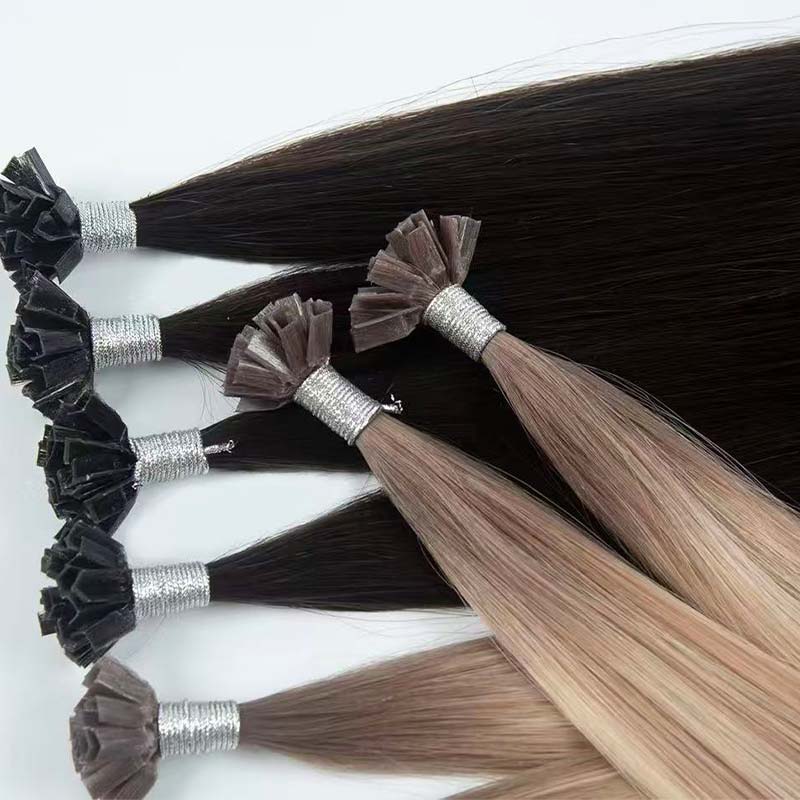
The term hair extensions covers a broad range of products designed to add additional hair to natural hair. Depending on the method, extensions may be attached with adhesive tape, keratin bonds, small rings, clips, or sewn wefts.
There is no single extension method that is best for every wearer. Fine hair may require a lightweight, discreet attachment, while thicker hair may support a different installation system. Some customers prioritize fast application, while others prefer long-term wear or an adhesive-free method.
For professional buyers, the decision goes further. Hair quality, attachment consistency, color range, weight, packaging, and repeat-order stability all matter when choosing products for a salon, retail business, or private-label collection.
Sasil currently offers a broad range of human hair extensions, including tape-in, keratin-tip, nano-ring, micro-ring, flat-tip, I-tip, U-tip, and V-tip options for different application requirements.
What Are Human Hair Extensions?
Human hair extensions are additional lengths or sections of real human hair designed to blend with a wearer’s natural hair.
They can be used for several purposes:
- increasing overall length;
- adding density to fine or medium hair;
- creating fuller ends;
- adding dimensional color without coloring all of the natural hair;
- supporting temporary or long-term hairstyle changes;
- creating professional salon transformation services.
The final result depends not only on the extension method but also on how well the extension hair matches the client’s natural texture, color, density, and movement.
Human hair also provides more styling flexibility than many synthetic alternatives because suitable products can generally be curled, straightened, washed, and restyled according to the manufacturer’s care requirements.
Main Types of Hair Extensions
The easiest way to understand hair extensions is to classify them by their attachment method.
| Extension Type | Attachment Method | Heat or Glue Required? | Common Advantage | Typical Use |
|---|---|---|---|---|
| Tape-In | Flat adhesive strips | No heat | Flat, discreet attachment | Fast salon applications |
| I-Tip | Individual tip attachment | Depends on system | Flexible strand placement | Customized volume and length |
| U-Tip | Keratin fusion bond | Heat | Secure long-term attachment | Professional salon installation |
| V-Tip | Shaped keratin bond | Heat | Discreet bonded connection | Long-term wear |
| Flat Tip | Flat keratin bond | Heat | Low-profile connection | Fine to medium hair |
| Nano Ring | Very small rings | No glue or heat | Tiny attachment points | Discreet strand-by-strand use |
| Micro Ring | Small rings | No glue or heat | Repositionable attachment | Professional maintenance programs |
| Hair Weft | Sewn, beaded, or other weft system | Varies | Efficient coverage | Volume and full-head applications |
Each method creates a different balance between installation speed, attachment visibility, maintenance, flexibility, and professional skill requirements.
Tape-In Hair Extensions
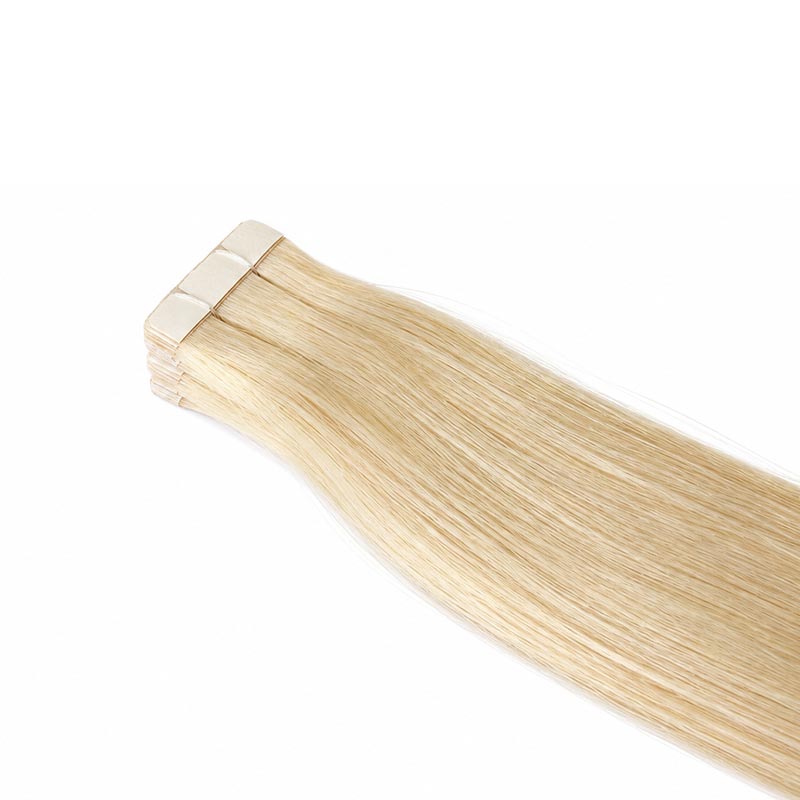
Tape-in extensions use thin adhesive sections that are placed close to the scalp, usually with a section of natural hair positioned between two extension pieces.
Their low-profile structure is one of the main reasons tape methods remain popular in salons. When properly sectioned and installed, the attachment can lie relatively flat against the head and distribute extension hair across a broader area than an individual strand bond.
Sasil’s PU Tape Hair Extensions use thin PU adhesive sections designed for flat installation and can be customized for different colors, lengths, weights, textures, and packaging requirements.
Who Are Tape-In Extensions Best For?
Tape-in systems may suit clients who want:
- relatively quick salon installation;
- flat attachment areas;
- added length and volume;
- removable and replaceable extension sections;
- a method that does not rely on heat fusion during installation.
They are also commercially attractive for salons because the application process is relatively standardized and maintenance appointments can form part of an ongoing extension service.
However, attachment placement matters. Tape pieces should not be installed too close to the hairline or in areas where they may become visible during styling.
I-Tip Hair Extensions
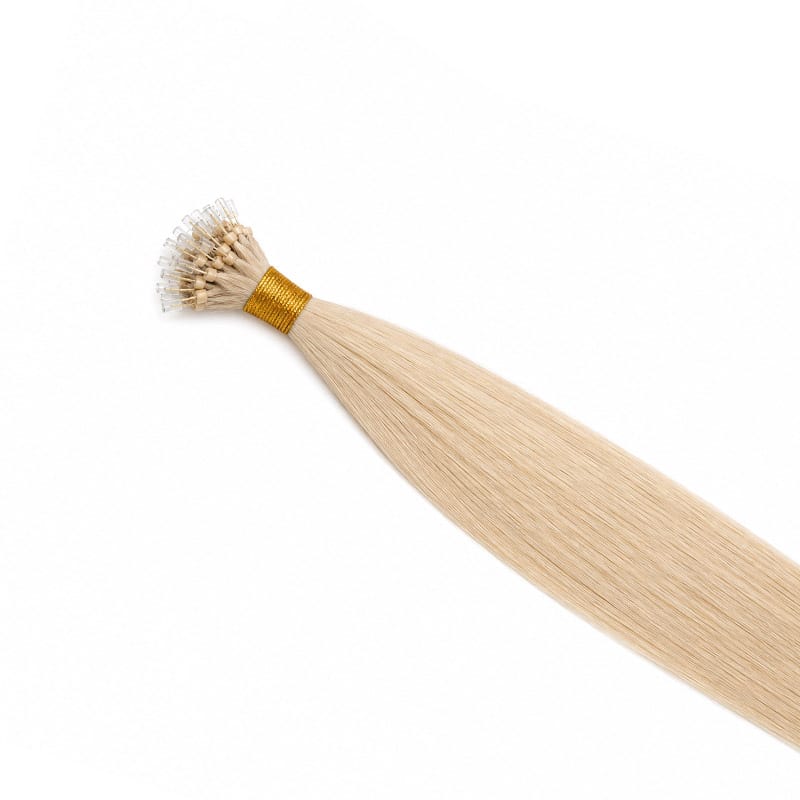
I-tip extensions use individual strands with narrow tips, allowing the stylist to control where additional hair is placed.
This makes the method especially useful when targeted volume or carefully distributed length is required.
The I Tip Hair Extension supplied by Sasil is available for professional applications and can be customized in different lengths, colors, textures, weights, and packaging formats.
Because I-tip systems are applied strand by strand, installation usually takes longer than tape-in methods, but stylists gain greater control over individual placement.
This can be particularly useful around areas where large tape sections would be less suitable.
U-Tip Hair Extensions
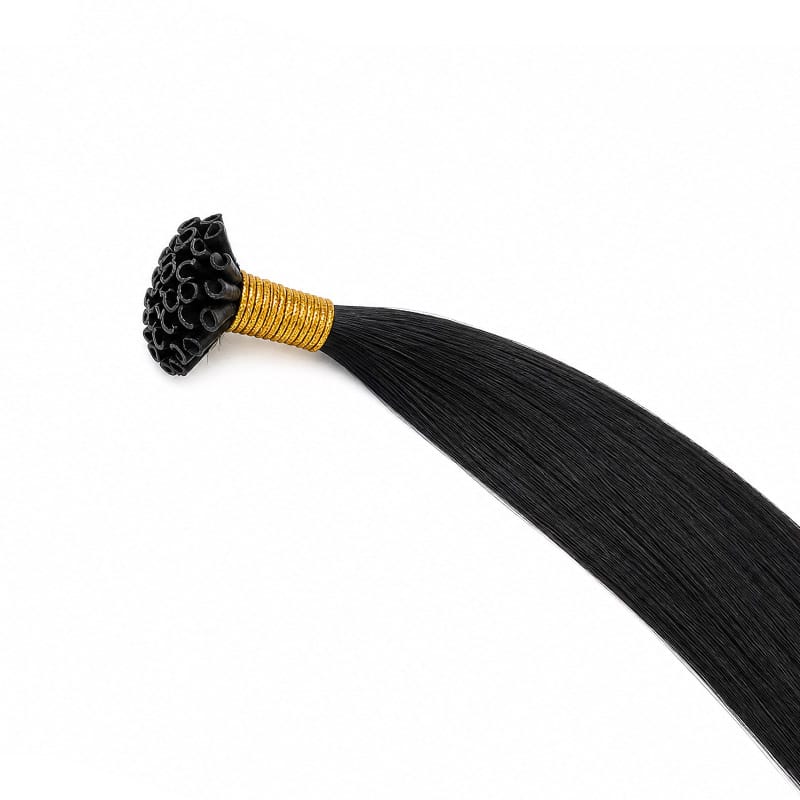
U-tip extensions are one of the best-known types of pre-bonded hair extensions.
Each section includes a U-shaped keratin bond that is softened using a professional heating tool before being molded around a small section of natural hair.
Sasil’s U Tip Hair Extensions are available in multiple lengths and can be customized according to color, weight, packaging, and branding requirements.
U-tip systems are generally selected when customers want a secure, individually placed extension method that can remain installed for an extended period with appropriate maintenance.
Because heat and keratin bonding are involved, professional application is particularly important.
V-Tip Hair Extensions
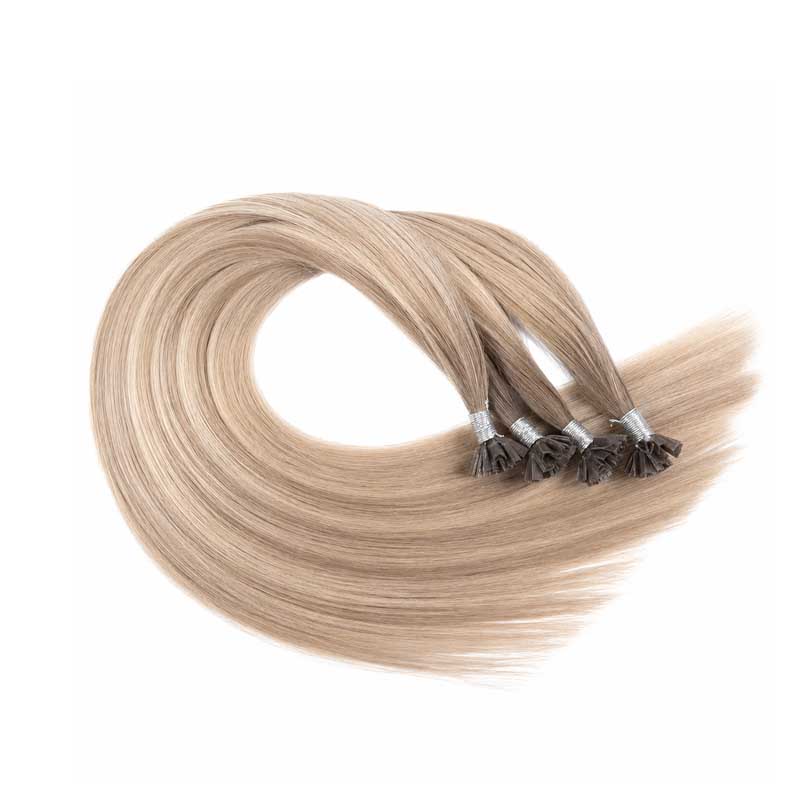
V-tip extensions are another pre-bonded keratin option, but the attachment is shaped differently from the traditional U-tip structure.
The V-shaped bond is designed to create a controlled attachment point while maintaining strand-by-strand placement.
Sasil’s V Tip Hair Extension is designed for professional salon use and supports customized colors and lengths.
The difference between U-tip, V-tip, and other keratin methods may appear small to an end customer, but attachment shape can influence how a stylist handles, positions, and molds the bond.
For this reason, professional buyers should test several attachment formats before deciding which products best fit their market.
Flat Tip Keratin Hair Extensions
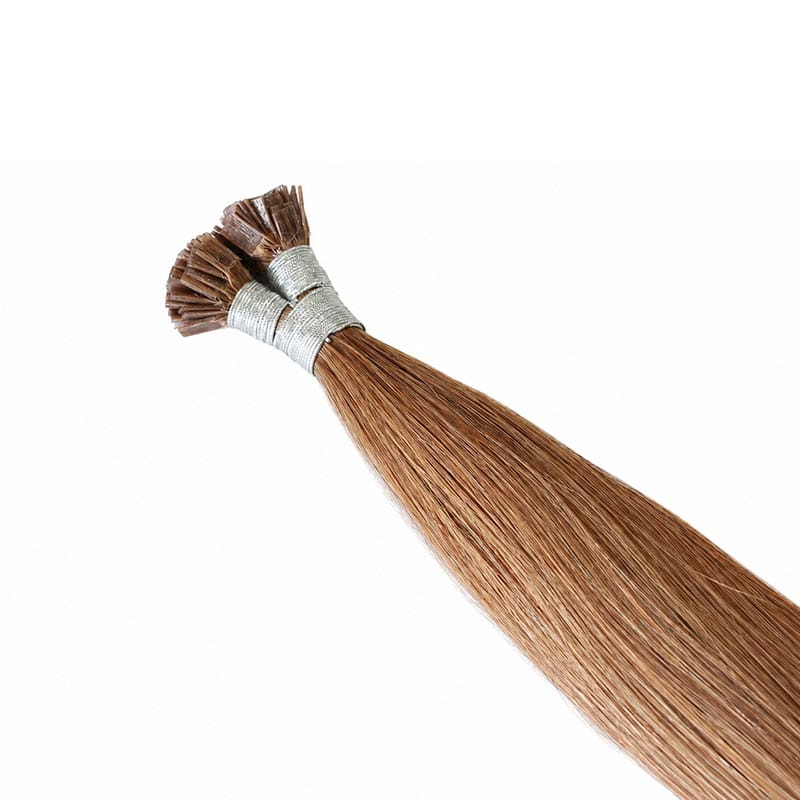
Flat-tip extensions combine individual strand placement with a flatter bond profile.
Instead of creating a rounded attachment, the bond is designed to sit more closely against the natural hair.
The Flat Tip Keratin Hair Extension is one option for salons seeking a low-profile bonded extension method.
Flat-tip systems can be useful when discreet attachment is a priority, particularly when the stylist needs the control of individual strands but wants the bond to remain relatively flat.
As with other fusion systems, the final result depends heavily on professional sectioning and correct bond size.
Nano Ring Hair Extensions
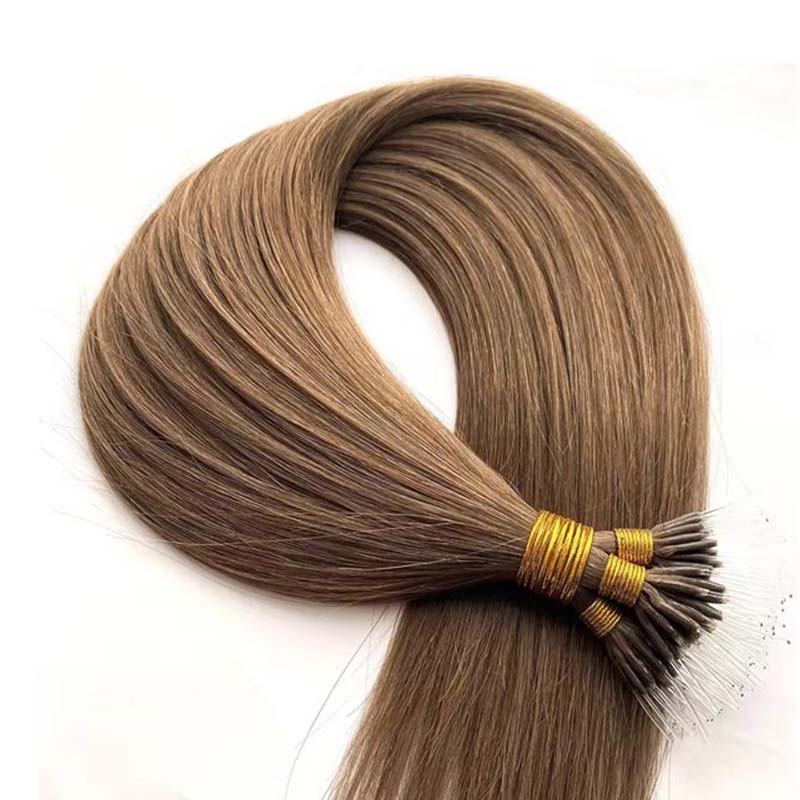
Nano-ring extensions attach individual strands using very small rings rather than adhesive or keratin fusion.
The main attraction is the small attachment size.
Sasil’s Nano Ring Hair Extensions use small metal rings and do not require adhesive or heat for attachment.
Because nano rings are significantly smaller than many traditional ring systems, they can create discreet connection points when correctly installed.
They are often considered by salons serving customers who want:
- strand-by-strand placement;
- an adhesive-free method;
- no heat-fusion step;
- small attachment points;
- adjustable placement.
However, “small” does not automatically mean suitable for everyone. The strength and density of the natural hair still need to be considered.
Micro Ring Hair Extensions
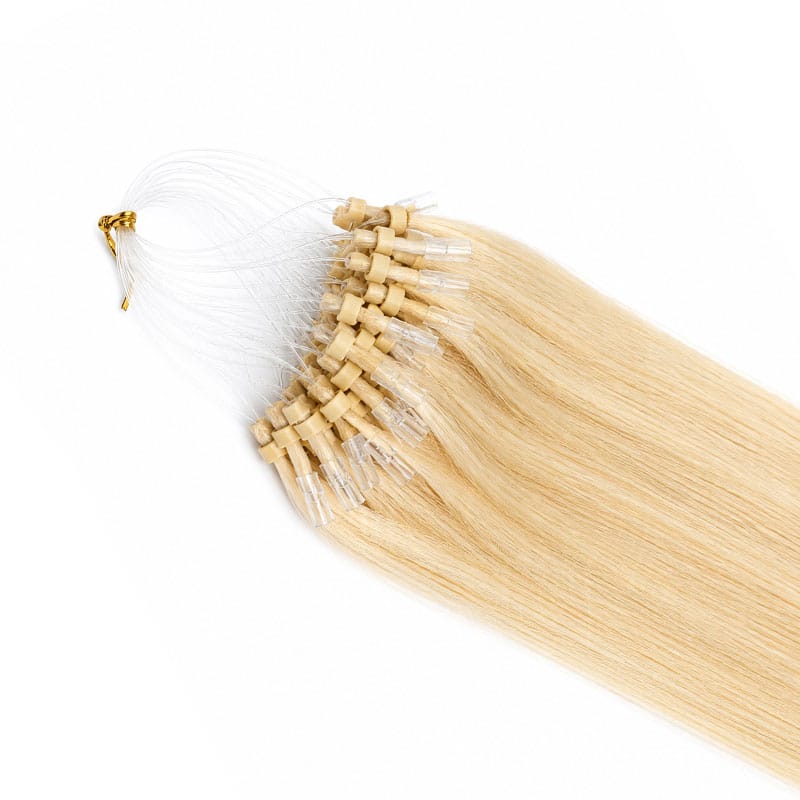
Micro-ring extensions operate on a similar principle but generally use a slightly larger attachment than nano-ring systems.
Natural hair and extension hair are secured inside a small ring, which is then closed using professional tools.
Sasil’s Micro Ring Loop Hair Extensions are designed for applications that do not require glue or heat.
One advantage of ring-based systems is that the attachment can often be repositioned during maintenance rather than replaced in the same way as some adhesive systems.
That makes them attractive for salons offering scheduled maintenance services.
Nano Ring vs Micro Ring Hair Extensions
Although the two methods are related, they should not automatically be treated as interchangeable.
| Factor | Nano Ring | Micro Ring |
| Attachment Size | Very small | Slightly larger |
| Adhesive | No | No |
| Heat Fusion | No | No |
| Placement | Individual strands | Individual strands |
| Visibility | Very discreet when correctly installed | Discreet |
| Maintenance | Requires professional repositioning | Requires professional repositioning |
| Best Decision Factor | Natural hair strength and desired discretion | Hair density and stylist preference |
The best method depends on hair condition, density, stylist technique, expected maintenance, and desired appearance.
Human Hair Wefts
Wefts differ from individual strand extensions because multiple hairs are constructed into a continuous track.
This allows stylists to add substantial volume or length efficiently.
Sasil offers a dedicated range of human hair wefts, including hand-tied, machine-made, imitation hand-tied, and PU-related constructions.
Wefts may be installed using several salon techniques, including sewn or beaded systems, depending on the product and stylist.
For professional buyers, wefts are particularly important because construction quality directly affects:
- thickness along the weft line;
- flexibility;
- shedding resistance;
- comfort;
- cutting flexibility;
- installation efficiency.
This is why “human hair weft” should not be treated as one standardized product category.
Which Hair Extension Method Is Best?
The best hair extension type depends on the client rather than on one universally superior product.
A useful selection process considers five factors.
Natural Hair Density
Fine or fragile hair generally requires more careful weight distribution and discreet attachments.
Thicker natural hair may support a broader selection of attachment methods.
Desired Result
Someone seeking subtle volume may need significantly less extension hair than a customer seeking a full transformation from short to long hair.
The amount, weight, and placement should therefore match the intended result.
Maintenance Preference
Some users are comfortable returning to a salon regularly for repositioning, while others prefer a method with a different maintenance schedule.
Salons should explain this before installation rather than focusing only on the initial appearance.
Styling Habits
Frequent updos, high ponytails, heat styling, swimming, or intensive exercise may affect which attachment placement is practical.
Professional Experience
Some methods require more specialized salon training than others.
The skill of the installer can be just as important as the extension itself.
Hair Extension Safety and Proper Installation
Hair extensions should add cosmetic length or volume without placing unnecessary stress on natural hair.
The American Academy of Dermatology advises that extensions and weaves should be professionally installed and should not feel painfully tight. Repeated excessive pulling can contribute to traction alopecia.
The AAD also notes that hairstyles and extensions that continuously pull on the hair can eventually cause breakage or hair loss. Their guidance on hairstyles and traction alopecia reinforces the importance of avoiding excessive tension.
This means product selection should always consider natural hair condition.
A heavier extension is not automatically better, and a stronger attachment is not automatically safer. Weight, bond size, placement, and maintenance should work together.
Human Hair Quality Matters as Much as the Method
Two extensions using the same attachment method can perform very differently if their hair quality and manufacturing consistency differ.
Professional buyers should examine:
Hair feel and movement.
The hair should move naturally without excessive stiffness.
Color consistency.
A shade should remain reasonably consistent across packs and repeat orders.
Length distribution.
Buyers should understand whether the product is single drawn, double drawn, or manufactured to another density specification.
Tangling performance.
Poor cuticle handling or aggressive processing can affect long-term manageability.
Shedding.
For wefts and bonded products, attachment construction should be inspected carefully.
Tip or bond consistency.
Keratin, tape, ring loops, and other attachment components should have consistent dimensions.
For distributors and salons, these factors often matter more than packaging claims such as “premium” or “luxury.”
How Professional Buyers Should Compare Hair Extensions
A salon purchasing a few packs has different priorities from a distributor purchasing hundreds or thousands of units.
Professional buyers should evaluate the complete product system.
| Buying Factor | Why It Matters |
| Hair Material | Influences appearance, styling, and durability |
| Attachment Construction | Affects installation consistency |
| Color Range | Determines market coverage |
| Length Range | Supports different customer needs |
| Weight per Pack | Helps salons calculate complete installations |
| Texture Consistency | Important for repeat orders |
| Packaging | Influences retail presentation |
| Sample Availability | Allows testing before bulk purchasing |
| Batch Consistency | Critical for wholesalers and brands |
| Customization | Supports differentiated product ranges |
Before placing a large order, samples should ideally be assessed under real salon conditions rather than judged only by appearance immediately after opening.
Choosing Products for a Hair Extension Business
A successful extension collection usually does not need every method available on the market.
A more practical approach is to build a range around the customers the business already serves.
For example, a salon focusing on quick applications may prioritize tape-in systems.
A specialist extension salon may offer tape, keratin, nano-ring, and micro-ring options.
A distributor may need a wider selection to serve multiple professional customer groups.
Private-label brands should also consider whether customers require:
- different shades;
- mixed or rooted colors;
- straight, wavy, or other textures;
- multiple lengths;
- custom pack weights;
- branded labels;
- retail bags or boxes;
- color and SKU labels.
Sasil provides OEM and ODM human hair manufacturing services for salons, distributors, wholesalers, and private-label brands requiring customized product specifications, colors, lengths, textures, labels, packaging, and bulk production.
Why Sample Evaluation Matters Before Bulk Ordering
Sample testing is one of the most important steps in professional hair purchasing.
A sample should not only be photographed and visually inspected. It should be handled, washed, dried, styled, brushed, and evaluated through the same process an end customer would experience.
For bonded extensions, inspect the attachment structure.
For tape extensions, evaluate tape width, profile, and consistency.
For ring systems, inspect strand weight and connection construction.
For wefts, examine stitching, flexibility, thickness, and shedding.
Professional buyers should also confirm that the approved sample can be used as a reference standard for future production.
This creates clearer expectations between buyer and manufacturer.
Hair Extension Care and Maintenance
Correct maintenance helps both natural hair and extension hair remain manageable.
A few principles apply across most extension methods.
Use gentle washing techniques rather than aggressively rubbing attachment areas.
Detangle from the ends upward while supporting the hair near the attachment.
Avoid excessive heat, especially around adhesive or keratin connections.
Follow the installation-specific maintenance schedule recommended by the salon.
The American Academy of Dermatology’s hair styling guidance also recommends limiting excessive heat and avoiding hairstyles that repeatedly create strong pulling tension.
Users experiencing persistent scalp pain, irritation, or unusual hair loss should stop treating the issue as a simple extension-maintenance problem and seek appropriate professional advice.
Common Mistakes When Choosing Hair Extensions
One of the most common mistakes is choosing solely by price.
Lower unit cost may become expensive if inconsistent color, excessive shedding, poor attachment construction, or high return rates create problems later.
Another mistake is assuming that one extension method will work for every customer.
A salon should be able to assess natural hair before recommending attachment type and extension weight.
Professional buyers also sometimes order too many SKUs immediately.
Starting with a controlled selection, testing customer response, and expanding based on real sales data is often more practical.
Finally, businesses should avoid evaluating hair only by how silky it feels when first removed from the packaging. Processing and finishing products can temporarily influence initial hand feel, so washing and wear testing provide a more useful assessment.
Frequently Asked Questions
What is the most popular type of hair extension?
Popularity varies by country, salon technique, and customer preference. Tape-in, keratin-bonded, ring-based, and weft extensions are all widely used. The best commercial choice depends on the target market rather than global popularity alone.
Are human hair extensions better than synthetic extensions?
Human hair is generally preferred when natural movement and greater styling flexibility are priorities. Synthetic products may be suitable for different price points or temporary use, so the correct choice depends on the intended market.
What hair extensions are best for fine hair?
Fine hair usually requires careful attention to extension weight, bond size, placement, and visibility. Tape-in, nano-ring, or certain low-profile bonded methods may be considered, but the natural hair should always be assessed by an experienced stylist first.
What is the difference between nano rings and micro rings?
Both use ring-based strand attachment without heat fusion or adhesive. Nano-ring connections are generally smaller, while micro-ring systems use a slightly larger attachment. Suitability depends on hair density and stylist preference.
Are tape-in extensions applied with heat?
Traditional tape-in application uses adhesive tape rather than keratin heat fusion. Correct sectioning and positioning are still important for secure installation.
How should wholesalers evaluate human hair extensions?
Buyers should test hair quality, color consistency, length, density, tangling, shedding, attachment construction, packaging, and sample-to-bulk consistency before committing to larger orders.
Can hair extensions be customized for private-label brands?
Yes. Depending on the manufacturer, customization can include hair length, color, texture, weight, product structure, labels, packaging, barcodes, and branding. Sasil provides OEM/ODM customization for professional buyers requiring private-label product development.
Conclusion
Choosing between tape-in, I-tip, U-tip, V-tip, flat-tip, nano-ring, micro-ring, and weft extensions is not simply a matter of deciding which method looks best. Each system offers a different combination of attachment size, installation technique, maintenance requirements, placement flexibility, and commercial application.
For individual users, natural hair condition and professional installation should remain the priority. For salons, wholesalers, distributors, and private-label brands, consistent hair quality and reliable manufacturing are equally important.
Sasil offers multiple human hair extension styles for professional markets, with options for customized colors, lengths, textures, weights, packaging, and branding. Buyers developing a new extension collection can also review the full Sasil human hair product range and use its OEM/ODM service to discuss sampling and bulk production requirements.