Tabla de contenidos
Introducción
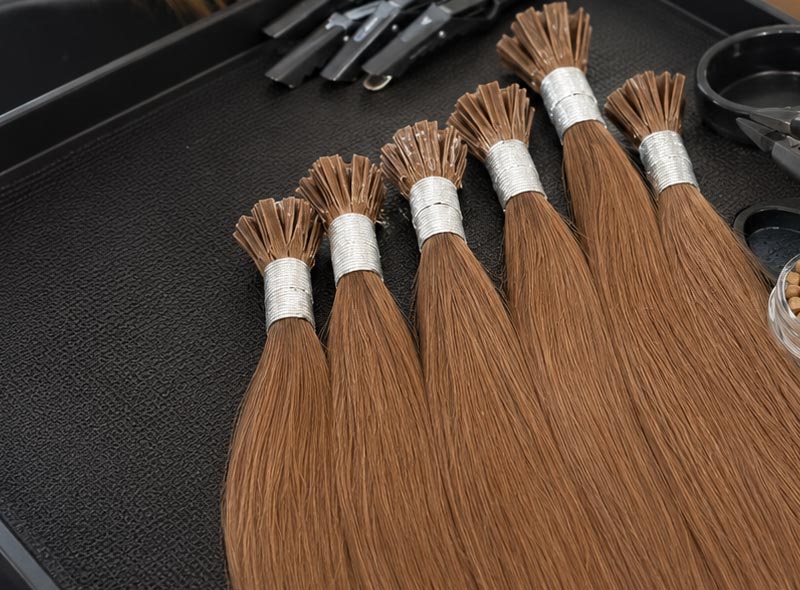
Hair extensions can add length, volume, texture or color without requiring a permanent change to natural hair. However, the final result depends on much more than selecting an attractive shade or a preferred length. Attachment method, extension weight, natural hair density, maintenance expectations and installation skill all influence comfort, blending and long-term performance.
Esta guía explica:
- The main types of hair extensions and how they are attached
- The differences between weft, tape-in, keratin and ring systems
- How natural hair density affects product selection
- Which methods suit temporary and semi-permanent applications
- How to evaluate human hair, bonds, wefts and attachment points
- What salons and hair brands should consider when specifying products
The right method is the one that distributes weight appropriately, matches the client’s natural texture and fits the intended maintenance routine. No single extension system is automatically suitable for every person or application.
What Are Hair Extensions?
Hair extensions are additional strands or sections of hair attached to natural hair to increase length, density, texture or color. They may be temporary, removable or semi-permanent, depending on the attachment system.
The broader category of artificial hair integrations includes clip-in, tape-in, fusion, ring and sewn-in methods. Some systems use individual strands, while others use continuous wefts that distribute hair across a wider area.
Human hair extensions are commonly selected for professional applications because they offer natural movement and greater styling flexibility. Unlike standard synthetic fibers, suitable human hair can normally be washed and styled under controlled conditions. Performance still depends on the hair grade, previous processing and care routine.
The attachment should not be selected based on appearance alone. A successful installation must balance four factors: natural hair strength, attachment visibility, added weight and expected maintenance.
Main Types of Hair Extensions
Hair extension systems can be organized into four broad groups: weft-based extensions, adhesive extensions, keratin-bonded extensions and ring-based extensions.
Weft Hair Extensions
A hair weft consists of multiple strands secured along a continuous upper seam. The weft may be sewn, beaded or integrated into a row created by a professional stylist. This structure distributes hair across a larger area instead of placing every strand on a separate bond.
Wefts are available in several constructions. Machine weft hair extensions use a reinforced machine-sewn seam that is stable and suitable for applications requiring a substantial amount of hair. Hand-tied, genius and butterfly wefts offer different balances of edge thickness, flexibility, density and installation control.
A weft should be selected according to seam thickness, available placement space, required coverage and whether the installer needs to cut it. Not every weft construction can be cut freely without additional sealing or reinforcement.
Extensiones de cabello con cinta adhesiva
Tape-in extensions use thin sections of hair attached to adhesive tabs. During installation, a small section of natural hair is placed between two matching tabs, creating a flat attachment.
A well-designed tape section can lie close to the scalp and distribute weight over a broader surface. This often makes tape-in systems useful where low-profile attachment and relatively fast installation are priorities.
The PU base, adhesive stability, tab width and hair distribution all affect performance. PU tape-in human hair extensions should be matched carefully so paired tabs have consistent density, color and dimensions.
Tape-in extensions require professional positioning. Tabs placed too close to the scalp may not move naturally, while tabs placed too far away may become visible or rotate. Oils and heavy conditioners should also be kept away from the attachment area because they can interfere with adhesion.
Keratin-Bonded Hair Extensions
Keratin extensions use individual strands with preformed bonding tips. A professional installer softens or activates the bond and attaches it to a controlled section of natural hair.
Common tip shapes include:
- I-Consejo
- U-Tip
- V-Tip
- Flat Tip
- Nail Tip
- Stick Tip
The tip shape affects how the strand is handled, heated and positioned. It does not independently determine quality. Bond composition, bond size, hair weight and manufacturing consistency are equally important.
Flat tips create a flatter attachment profile, while U-Tip and V-Tip formats provide defined bonding shapes for heat-assisted installation. The best option depends on the installer’s technique and the client’s natural hair.
Keratin systems provide detailed strand-by-strand placement, making them useful when precise distribution is required. Installation and removal should be handled by trained professionals to avoid excessive heat, oversized sections or unnecessary pulling.
Ring and Loop Hair Extensions
Ring-based systems attach extension strands without heat or adhesive. A small section of natural hair and an extension strand are passed through a ring, which is then secured with a professional tool.
Micro loops contain a loop that helps guide natural hair through the attachment. Nano rings use smaller connection components that may be easier to conceal in certain areas. The smaller size does not mean they are appropriate for every client; the natural hair still needs sufficient strength to support the added strand.
Nano ring hair extensions can offer a discreet connection when ring color, strand weight and placement are properly matched. Regular maintenance is necessary because natural hair growth gradually moves the attachment away from the scalp.
Comparison of Hair Extension Methods
The following table compares the main professional methods. Actual installation and maintenance requirements can vary according to natural hair condition, product design and stylist technique.
| Método de extensión | Attachment | Perfil | Best suited to | Main consideration | Professional installation |
|---|---|---|---|---|---|
| Trama de máquina | Sewn or secured along a row | Medium to substantial | Medium or thick hair requiring coverage | Seam thickness and row tension | Required |
| Trama atada a mano | Sewn onto a prepared row | Thin and flexible | Fine to medium hair when carefully installed | Cannot always be cut freely | Required |
| Genius weft | Thin, flexible weft edge | Low profile | Clients wanting flexible row placement | Edge construction and density consistency | Required |
| Grabación | PU adhesive tabs | Flat | Fine to medium hair and distributed attachment | Adhesive care and tab placement | Required |
| Keratin bond | Heat-activated individual tips | Small individual bonds | Customized strand distribution | Heat, bond size and removal technique | Required |
| Micro loop | Ring and loop system | Small individual points | Medium-density hair without adhesive | Ring visibility and repositioning | Required |
| Nanoanillo | Conexión de anillo pequeño | Very discreet | Suitable natural hair with enough strength | Strand weight and controlled tension | Required |
| Clip-in | Removable clips | Varies by weft | Occasional or temporary use | Correct clip placement and daily removal | Not always required |
This comparison shows why “the best extension” cannot be chosen without context. A discreet bond may still be unsuitable if the strand is too heavy. A durable weft may create excessive bulk when there is insufficient natural hair to conceal it.
Human Hair vs Synthetic Hair Extensions
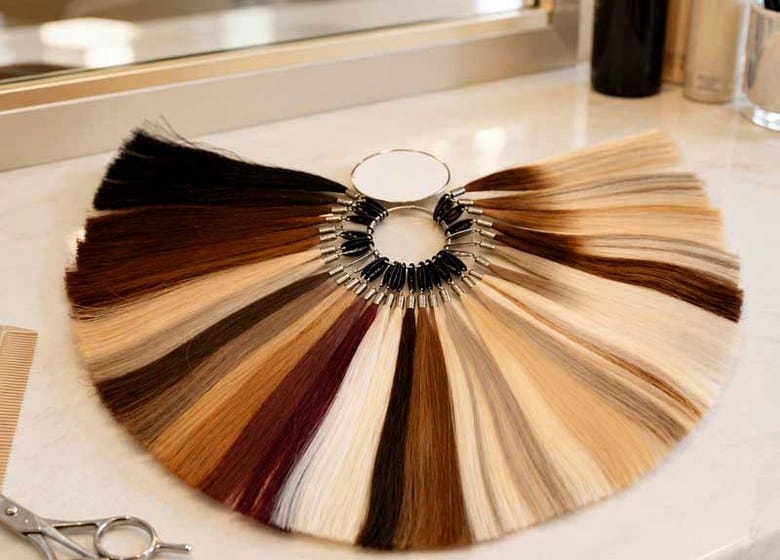
Material selection influences movement, styling options, texture matching and overall appearance.
Human hair generally offers more natural variation in strand diameter and movement. It can be suitable for professional coloring and heat styling when its condition and previous processing allow it. However, the term “human hair” alone does not confirm consistent quality.
Remy hair describes hair in which the cuticles are kept in a consistent direction. Aligned cuticles can help reduce friction and tangling, particularly during washing and repeated wear. Processing quality remains important because aggressive lightening, coating or chemical treatment can weaken otherwise usable hair.
Synthetic fibers are designed to maintain a manufactured color or texture. They may work for temporary styling, but their response to heat, coloring and repeated washing differs from human hair. A synthetic product should only be exposed to heat when the fiber manufacturer confirms that it is heat-compatible.
Professional product evaluation should consider:
- Cuticle direction
- Strand strength
- Texture consistency
- Hair thickness from root area to ends
- Shedding after brushing and washing
- Color stability
- Response to controlled heat
- Residue from surface coatings
- Performance after repeated washing
A visually smooth sample does not necessarily predict long-term performance. Silicone or other surface treatments can temporarily change the initial feel, so testing should include washing and drying rather than relying only on the first inspection.
How to Choose Hair Extensions for Different Hair Types
Natural hair condition should be assessed before selecting an attachment method. The purpose is not simply to conceal the connection but to distribute the added load without creating excessive tension.
Fine or Thin Hair
Fine hair generally requires lighter extension sections and discreet attachment points. Thick seams, oversized bonds or heavy strands can be difficult to conceal and may place unnecessary stress on limited natural hair.
Low-profile tape tabs, carefully selected lightweight wefts or small individual attachments may be considered, depending on density and scalp condition. Placement should avoid areas where natural hair is too sparse to cover the connection.
More extensions do not automatically create a better result. A controlled amount that blends with the client’s natural density often looks more realistic than excessive added volume.
Cabello de densidad media
Medium-density hair can accommodate a broader range of systems. Tape-in, ring, keratin and weft methods may all be possible after evaluating texture, lifestyle and maintenance preferences.
The main decision is usually how the client wants to maintain the extensions. Someone who prefers individual movement may favor strand-based systems, while someone seeking substantial coverage may benefit from a well-positioned weft.
Thick or Coarse Hair
Thick natural hair often needs sufficient extension density to create an even transition. Extensions that are too light at the ends can remain visible as a separate layer rather than blending with the natural hair.
Wefts, strand systems and multiple-row arrangements may be considered, but the attachment must still be distributed carefully. Strong natural hair does not justify excessive tension.
Curly and Textured Hair
Texture matching is especially important for curly, coily or wavy hair. A color match alone will not create a seamless result if curl diameter, shrinkage and strand texture differ significantly.
The extension should be evaluated in its washed and naturally dried state. Some processed textures look consistent when packaged but change after cleansing. Testing helps determine whether the pattern remains compatible with the intended application.
How Length, Weight and Density Affect the Result
Length is one of the most visible specifications, but it cannot be selected separately from weight and density.
Longer extensions require enough hair through the middle and ends to avoid a thin or disconnected appearance. The same nominal weight produces different visual coverage at different lengths because longer hair spreads that weight over a greater distance.
For volume-focused applications, the extension length may remain close to the natural hair while additional density is distributed through selected areas. For length-focused applications, blending usually requires more attention to layering and end density.
The following factors should be specified together:
- Longitud terminada
- Total weight
- Weight per strand or weft
- Natural hair density
- Desired end fullness
- Number of attachment rows
- Placement area
- Texture and curl pattern
Single-drawn hair contains more natural variation in strand length. Double-drawn hair has a higher proportion of similarly long strands, which creates fuller ends. Neither option is universally correct; the appropriate structure depends on the intended visual effect and product positioning.
Selecting the Right Color and Texture
A successful color match considers more than the hair near the root. Natural hair may contain several tones through the mid-lengths and ends, especially when it has been highlighted, lightened or exposed to sunlight.
Extensions are usually blended through the lengths, so matching the middle and end sections often produces a more natural result than matching only the root. Mixed shades, balayage effects and rooted colors can help reproduce tonal variation.
Color assessment should be performed under neutral or natural lighting. Warm indoor lighting can make ash shades appear warmer, while cool lighting may reduce the visibility of gold or red tones.
La coincidencia de texturas debe considerar:
- Straight, wavy, curly or coily pattern
- Strand diameter
- Surface smoothness
- Natural volume
- Response to humidity
- Appearance after washing
- Styling routine
When supplying repeat orders, color coding alone is not enough. Physical color samples, approved reference swatches and batch comparison records provide stronger control over consistency.
Installation Quality Matters as Much as Product Quality
Even well-manufactured hair extensions may perform poorly when installed incorrectly. Attachment sections that are too large, too small or uneven can create imbalance. Excessive tension may cause discomfort, while weak placement may lead to slipping or visible connections.
The American Academy of Dermatology advises that extensions and weaves should not feel painful or excessively tight. Repeated pulling can contribute to traction-related hair damage, making proper installation and tension management essential.
A professional assessment should be completed before installation if the client has:
- Active scalp irritation
- Unexplained shedding
- Fragile or severely processed hair
- Broken areas around the hairline
- Sensitivity to adhesives or metals
- Previous discomfort from extension systems
Pain, persistent headaches, scalp bumps or continued pulling should not be treated as a normal a normal adjustment period. The attachment should be checked promptly by a qualified professional.
Care and Maintenance Principles
Maintenance requirements differ by attachment method, but several principles apply to most human hair extensions.
Hair should be detangled gently from the ends upward while the attachment area is supported. Brushing aggressively from the roots can pull on bonds, rings or weft rows. The correct brush should move through the lengths without catching the connection points.
Shampoo should be distributed carefully rather than rubbed into a tangled mass. Conditioner can be applied to the middle and ends but should generally be kept away from adhesive tabs and other attachment areas where residue may reduce stability.
Before sleeping, the hair should be dry and loosely secured to reduce friction and tangling. Going to bed with wet extensions can increase matting around the attachment points.
Heat styling should be controlled. Even human hair may have undergone coloring or texture processing, so repeated high heat can reduce moisture, weaken the ends and shorten the usable life of the product.
Maintenance appointments should be planned according to natural hair growth and the attachment method. Extensions should not remain in place indefinitely. Grown-out connections may become harder to conceal and can change how weight is distributed.
How Professionals Can Evaluate Extension Quality
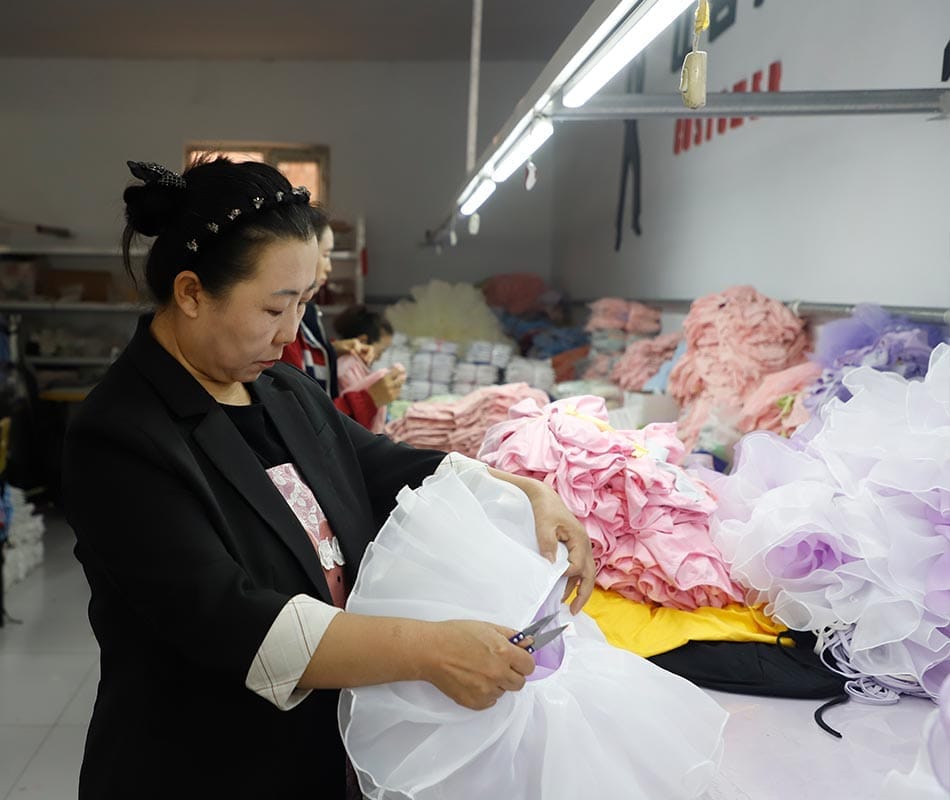
Quality evaluation should use repeatable tests instead of relying on a single visual inspection.
Start with a dry inspection to check length, weight, color consistency and end density. Gently brush the sample and record unusual shedding or short fiber release. The bond, tape or weft seam should also be checked for inconsistent dimensions.
A controlled wash test can reveal changes that are not visible when the product is new. Observe tangling, coating residue, color release, texture change and drying behavior. The hair should then be reassessed after natural drying and controlled styling.
For pre-bonded products, check whether tip dimensions remain consistent across the batch. Uneven tips can slow installation and create different-sized attachment points. For wefts, examine stitching, edge thickness, loose strands and whether the construction supports the intended cutting method.
For tape products, verify:
- Dimensiones de la pestaña PU
- Cobertura adhesiva
- Alineación entre piezas emparejadas
- Hair distribution across the tab
- Removal behavior
- Residue after controlled testing
For ring products, verify ring dimensions, interior lining where applicable, finish consistency and color matching. The ring must work reliably with the specified installation tool and strand format.
Hair Extensions for Salons, Brands and Distributors
Professional users need product specifications that remain consistent across repeat orders. A single attractive sample is not enough if later batches differ in weight, texture, bond size or color.
Before confirming a product range, specifications should cover:
- Material del cabello y nivel de procesamiento
- Length tolerance
- Weight tolerance
- Texture definition
- Referencia de color
- Tip or attachment dimensions
- Weft construction
- Packaging configuration
- Label information
- Inspection method
Customization should begin with a clearly documented sample. Once approved, that sample can act as the physical reference for future production and inspection.
Sasil Hair Products offers a broad range of extensiones de cabello humano covering tape, keratin, ring and related professional formats. Its OEM and ODM capabilities can support specification development involving product structure, length, color, weight and packaging according to confirmed project requirements.
Errores comunes de selección
One common mistake is choosing an attachment method only because it is currently popular. Trends do not account for individual hair density, scalp condition or maintenance habits.
Another mistake is using the smallest possible connection with an extension strand that is too heavy. A discreet attachment must still have an appropriate relationship between the natural hair section and the added weight.
Selecting by color number alone can also cause problems. Color coding systems differ between suppliers, and the same number may represent different tones. Physical references and sample confirmation are more dependable.
It is also risky to judge hair solely by its initial softness. Washing, drying and controlled styling provide better evidence of how the product may perform over time.
Finally, maintenance should be considered before installation. A method that requires regular professional repositioning will not be successful if the wearer cannot follow the required schedule.
Conclusión
Choosing suitable hair extensions requires a complete assessment of natural hair, attachment structure, added weight, texture, color and maintenance expectations. Wefts offer broad coverage, tape-ins create flat distributed connections, keratin tips allow individual placement, and ring systems avoid adhesive and heat. Each method has a useful role, but none is appropriate for every application.
For professional results, product selection and installation should work together. The extension must meet consistent material and construction standards, while the installer must control placement, section size and tension. When these factors are properly matched, extensions can produce natural movement, balanced density and reliable wear without unnecessary stress on natural hair.
Preguntas frecuentes
What type of hair extensions looks the most natural?
Natural appearance depends on more than the attachment type. Color, texture, density, strand weight and placement must match the natural hair. Tape-ins can create a flat profile, while keratin and nano ring systems allow detailed strand placement. Proper blending and professional installation usually make a greater difference than the method name alone.
Which hair extensions are suitable for fine hair?
Fine hair generally needs lightweight extensions and attachment points that can be concealed without placing excessive tension on limited natural hair. Carefully selected tape tabs, thin wefts or small individual strands may be considered. A professional should assess hair strength, density and scalp condition before recommending a method.
Are human hair extensions better than synthetic extensions?
Human hair generally provides more natural movement and greater styling flexibility, but its quality varies according to sourcing and processing. Synthetic extensions may retain a manufactured style but can have different heat and coloring limitations. The appropriate material depends on the intended application, expected styling and maintenance routine.
What is the difference between micro loop and nano ring extensions?
Both methods use small rings rather than heat-activated bonds or adhesive. Micro loop products include a loop that helps guide natural hair through the attachment, while nano ring systems use smaller connection components. Nano rings may be easier to conceal, but strand weight and natural hair strength must still be assessed.
How should hair extension quality be tested before a larger order?
Evaluation should include length and weight measurement, dry brushing, controlled washing, natural drying and limited heat styling. Bonds, tape tabs, rings or weft seams should be checked for dimensional consistency. Approved samples, color references and written specifications should then be retained to support repeat-order quality control.