
Inhaltsverzeichnis
Einleitung
Tape-in Haarverlängerungen sind zu einer etablierten Option geworden, um Länge, Dichte und Farbabmessung hinzuzufügen und gleichzeitig ein relativ flaches Befestigungsprofil beizubehalten. Im Gegensatz zu Strang-für-Strang-Fusionssystemen verwenden Bandverlängerungen dünne Klebeabschnitte, die das Verlängerungshaar nahe am natürlichen Haar halten, sodass Stylisten einen größeren Bereich mit weniger Befestigungspunkten abdecken können.
Die Wahl einer Bandverlängerung sollte jedoch mehr erfordern als nur die Betrachtung der fertigen Frisur. Bandbreite, PU-Konstruktion, Klebekonsistenz, Haarqualität, Schnitt, Platzierung, Wartung und Entfernung beeinflussen das Endergebnis.
Für Salons, Distributoren, Handelsmarken und andere professionelle Anwender spielen diese Details eine noch größere Rolle. Ein Bandverlängerungsprodukt muss nicht nur bei der ersten Installation natürlich aussehen, sondern auch eine konsistente Konstruktion und Spezifikationen bei wiederholter Verwendung bieten. In diesem Leitfaden werden die Funktionsweise von Tape-in-Erweiterungen, ihre wichtigsten Vorteile und Einschränkungen, geeignete Anwendungen und die Faktoren erläutert, die Fachleute bei der Bewertung untersuchen sollten.
Was sind Tape-In-Haarverlängerungen?
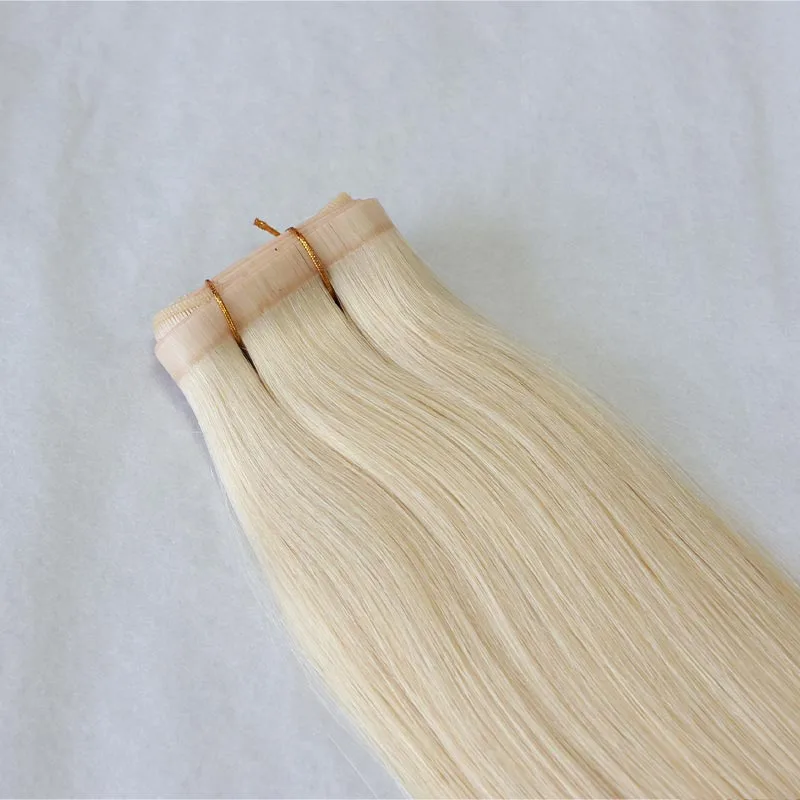
Bei Tape-in-Haarverlängerungen handelt es sich um vorsezierte Verlängerungen mit dünnen Klebelaschen, die oben an jedem Haarteil positioniert sind. Während der Installation trennt ein Stylist einen kontrollierten Abschnitt des natürlichen Haares und platziert die Verlängerungslaschen entsprechend der gewählten Anwendungstechnik um oder neben ihm.
Der Aufsatz ist so gestaltet, dass er relativ flach am Kopf bleibt.
Dies unterscheidet Bandverlängerungen von Keratinspitzensystemen, die viele kleine gebundene Stränge verwenden, und von Schussfäden, die eine größere durchgehende Haarspur über einen Abschnitt des Kopfes legen.
Ein gut gestaltetes Bandsystem zielt darauf ab, mehrere Eigenschaften auszugleichen:
- einem diskreten Befestigungsbereich;
- ausreichende Klebstabilität;
- Kontrolliertes Verlängerungsgewicht;
- Sogar Haarverteilung;
- Komfortable Platzierung;
- Bequeme professionelle Entfernung und erneute Anwendung.
Der Aufsatz selbst ist nur ein Teil des Produkts. Die Qualität und Verarbeitung des menschlichen Haares sind gleichermaßen wichtig für das Aussehen, die Bewegung, den Stil und die Mischung der Extensions nach der Installation.
Wie funktionieren Tape-In-Haarverlängerungen?
Die meisten Bandverlängerungssysteme verwenden einen dünnen Polyurethan- oder PU-Abschnitt oben im Haar.
Auf diesen Abschnitt wird eine Klebeschicht aufgetragen, bei der professionellen Montage wird das Naturhaar sorgfältig abgetrennt und so positioniert, dass die Verlängerung ohne unnötiges Ziehen flach liegt.
Eine gängige Methode platziert natürliches Haar zwischen zwei Klebebandstücken und erzeugt so ein relativ dünnes “Sandwich”” Andere Anwendungsmuster können je nach Verlängerungsdesign, Haardichte, Stylistentechnik und gewünschtem Ergebnis verwendet werden.
Da der Aufsatz einen größeren Bereich abdeckt als eine einzelne Keratinbindung, kann das Verlängerungshaar über den Abschnitt verteilt und nicht an einem einzigen Verbindungspunkt konzentriert werden.
Die richtige Schnittgröße bleibt wichtig Zu viel natürliches Haar kann die Wirksamkeit der Befestigung verringern, während zu wenig unnötige Verspannungen erzeugen kann.
Warum sind Bandverlängerungen so beliebt?
Ein Grund dafür, dass Haarverlängerungen mit Klebeband weit verbreitet sind, besteht darin, dass sie eine nützliche Kombination aus Geschwindigkeit, Diskretion und Vielseitigkeit bieten.
Für einen erfahrenen Stylisten kann das Aufbringen von Bandabschnitten im Allgemeinen unkomplizierter sein als das Aufbringen einer großen Anzahl einzelner gebundener Stränge. Die flachen PU-Laschen können auch schwer zu erkennen bleiben, wenn sie richtig unter dem umgebenden natürlichen Haar positioniert sind.
Damit ist das System für Kunden nützlich, die zusätzliche Länge oder Volumen ohne gut sichtbare Befestigungspunkte wünschen.
Bandsysteme können auch unterschiedliche Styling-Ziele unterstützen, statt für jeden Client die gleiche Stückzahl zu verwenden, kann der Stylist die Platzierung entsprechend dem gewünschten Ergebnis variieren.
Jemand, der bescheidene Fülle sucht, benötigt möglicherweise ein anderes Layout als jemand, der eine beträchtliche Länge und ein anderes Volumen anstrebt.
Hauptvorteile von Tape-In-Haarverlängerungen
Flaches Befestigungsprofil
Eines der bekanntesten Merkmale von Bandverlängerungen ist der flache Anschlussbereich.
Ein gut konstruierter PU-Bandabschnitt kann eher nahe an der Kopfhaut sitzen, als dass eine merklich erhöhte Bindung entsteht Dadurch kann der Aufsatz unter entsprechend geschnittenem Naturhaar leichter verborgen werden.
Für Kunden, die sich um sichtbare Verlängerungsanschlüsse sorgen, ist dies ein wichtiger Vorteil.
Effiziente professionelle Anwendung
Klebebandstücke decken eine größere Breite ab als einzelne Keratinstränge, sodass Stylisten Haare effizient über einen Abschnitt hinzufügen können.
Dies macht eine fachkundige Installation nicht überflüssig. Die korrekte Positionierung, saubere Schnitte, Gewichtsverteilung und Ausrichtung bleiben unerlässlich.
Die Grundstruktur macht Bandverlängerungen jedoch attraktiv für Salons, die regelmäßig Beratungsdienste durchführen.
Keine Wärmefusion während der Standardinstallation
Bei der herkömmlichen Bandverlängerungsanwendung wird eine Keratinverbindung mit einem Heizwerkzeug nicht durch Klebstoff geschmolzen, sondern durch das Schmelzen einer Keratinverbindung.
Dadurch unterscheidet es sich grundlegend von U-Tip-, V-Tip- oder anderen fusionsbasierten Erweiterungssystemen.
Kunden, die speziell nach einer Verlängerungstechnik ohne Wärmefusion suchen, können daher Bandsysteme in Betracht ziehen.
Flexible Platzierung
Bandabschnitte können strategisch um den Kopf verteilt werden.
Ein Stylist kann sie verwenden, um die Gesamtlänge zu verlängern, die Fülle an den Seiten und am Rücken zu erhöhen, spärlich aussehende Enden zu verstärken oder dimensionale Farbe einzuführen.
Diese Flexibilität ermöglicht die Anpassung des Anwendungsmusters, anstatt für jeden Client einem festen Layout zu folgen.
Geeignet für professionelle Anpassung
Für B2 B-Märkte können Bandverlängerungen über eine Reihe von Spezifikationen hinweg entwickelt werden.
Die Sasil PU Band Haarverlängerung Wird mit anpassbaren Optionen wie Haarlänge, Farbe, Textur, Gewicht und Verpackung angeboten, sodass professionelle Käufer eine Reihe entsprechend ihren Marktanforderungen konfigurieren können.
Welche Einschränkungen gibt es bei Haarverlängerungen mit Klebeband?
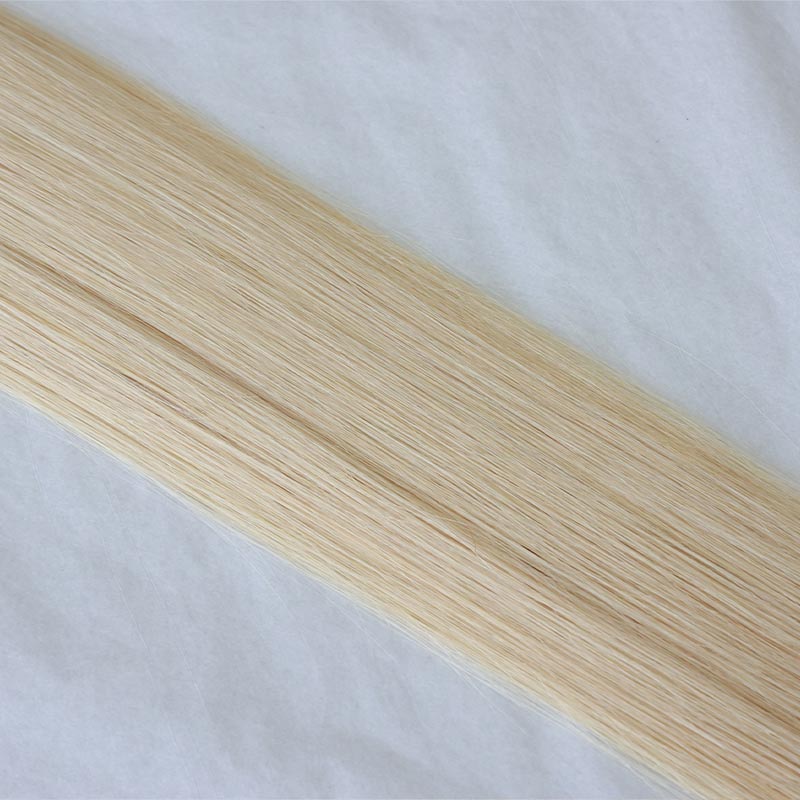
Ein ausgewogener Produktleitfaden sollte auch die Situationen berücksichtigen, in denen Bandverlängerungen zusätzliche Aufmerksamkeit erfordern.
Klebebereiche erfordern die richtige Pflege
Der Ansatzbereich sollte anders behandelt werden als die mittleren Längen und Haarenden.
Das Anbringen ungeeigneter Öle, Spülungen oder Stylingprodukte direkt um Klebeabschnitte kann die Befestigungsleistung beeinträchtigen.
Klienten benötigen daher eine klare Nachsorgeanleitung von ihrem Stylisten.
Platzierung kann sich auf das Haarstyling auswirken
Bandlaschen sind zwar flach, aber breiter als einzelne Strangverbindungen.
Wenn Verlängerungen zu nahe am Haaransatz, im Scheitelbereich oder an anderen gut sichtbaren Stellen angebracht werden, können sie leichter zu erkennen sein, wenn das Haar gefesselt oder neu gestaltet ist.
Bei der Platzierung sollte daher berücksichtigt werden, wie der Kunde normalerweise seine Haare trägt.
Wartung ist weiterhin erforderlich
Bandverlängerungen sind keine dauerhafte Installation.
Wenn natürliches Haar wächst, entfernt sich der Aufsatz allmählich weiter von der Kopfhaut. Durch professionelle Wartung kann der Stylist die Verlängerungen bei Bedarf entfernen, inspizieren und neu positionieren.
Das Erhaltungsintervall kann je nach natürlichem Haarwachstum, Extensionskonstruktion, Pflegegewohnheiten und Salonempfehlungen variieren.
Sie sind nicht automatisch für jede Haarerkrankung geeignet
Feine Haare und dünne Haare sind keine identischen Bedingungen.
Einige Kunden haben von Natur aus feine Strähnen, aber eine gesunde Dichte, während andere unter aktiver Ausdünnung, Bruch, Kopfhautbeschwerden oder geschwächtem Haar leiden können.
Verlängerungsgewicht und Ansatz sollten daher entsprechend dem Zustand des natürlichen Haares gewählt werden, anstatt einfach eine Methode zu wählen, weil sie als “leichtgewichtig” beschrieben wird”
Tape-In-Haarverlängerungen auf einen Blick
| Faktor | Tape-In-Haarverlängerungen |
|---|---|
| Anbringung | Dünnes Klebeband/PU-Abschnitt |
| Installation Style | Section-based |
| Heat Fusion | Not normally required |
| Connection Profile | Flach |
| Typical Goal | Length, volume, color dimension |
| Placement Flexibility | High |
| Maintenance | Periodic professional repositioning |
| Removal | Professional adhesive-release process |
| Best Evaluation Factors | Hair quality, PU construction, adhesive consistency, weight and placement |
| Professional Skill | Recommended |
This combination helps explain why tape extensions are used across many different salon environments, but the final result still depends heavily on installation and product quality.
Für wen eignen sich Tape-In-Haarverlängerungen am besten?
Tape-in hair extensions may be suitable for clients who want a balance between discreet attachment and noticeable additional hair.
They can be particularly useful for people seeking:
- additional overall length;
- fuller-looking mid-lengths and ends;
- increased density;
- dimensional color without coloring every section of natural hair;
- a relatively flat extension connection;
- an extension system without heat-fused bonds.
Their suitability should still be determined individually.
For example, a client who frequently wears very high ponytails may require a different placement strategy from someone who normally wears their hair down. A client with delicate areas around the temples may also require extensions to be positioned away from those sections.
The method should adapt to the wearer, not the other way around.
Sind Tape-In-Erweiterungen gut für feines Haar?
Tape systems are often considered for fine hair because their attachment is thin and distributes hair across a wider section than some strand-based methods.
But natural hair strength still matters.
A professional stylist should evaluate:
- strand thickness;
- overall density;
- existing breakage;
- hairline strength;
- scalp condition;
- previous chemical processing;
- extension weight.
The American Academy of Dermatology warns that extensions and hairstyles that continuously pull on natural hair can contribute to traction alopecia. Its guidance emphasizes avoiding painful or excessively tight extension styles and seeking professional installation. Read the dermatologists’ guidance on preventing hair damage from extensions.
The important principle is therefore not simply “tape extensions are suitable for fine hair.” The extension weight, placement, amount of natural hair supporting each attachment, and condition of that hair must all be appropriate.
Tape-In vs. Keratin-Haarverlängerungen
Tape and keratin systems achieve similar cosmetic objectives using very different attachment structures.
| Feature | Tape-In-Erweiterungen | Keratin Extensions |
|---|---|---|
| Anbringung | Flat adhesive tab | Individual keratin bond |
| Application | Section based | Strand by strand |
| Heat Fusion | Usually no | Typically yes |
| Attachment Width | Wider and flatter | Kleine Einzelpunkte |
| Placement Precision | Section-based flexibility | Very high strand-level control |
| Maintenance Approach | Remove and reposition | Depends on bond system |
| Best Choice Depends On | Hair type, styling and maintenance preference | Hair type, stylist skill and desired placement |
Neither method should automatically be described as superior.
Tape systems may appeal to someone prioritizing flat attachments and efficient application. Keratin methods may be preferred when highly individualized strand placement is important.
For salons, offering more than one technique makes it easier to select an extension according to the customer’s natural hair rather than forcing every customer into a single method.
Tape-In vs. Nano-Ring-Erweiterungen
Nano rings attach extension strands with very small metal rings rather than adhesive.
This creates another important distinction.
Tape systems spread the extension across a wider section. Nano systems create multiple small individual connections.
A client looking specifically for an adhesive-free technique may prefer a ring-based method, while someone prioritizing a flat, section-based connection may prefer tape.
This is why product comparisons should focus on attachment mechanics and user requirements rather than simply declaring one method “better.”
Warum PU-Bau wichtig ist
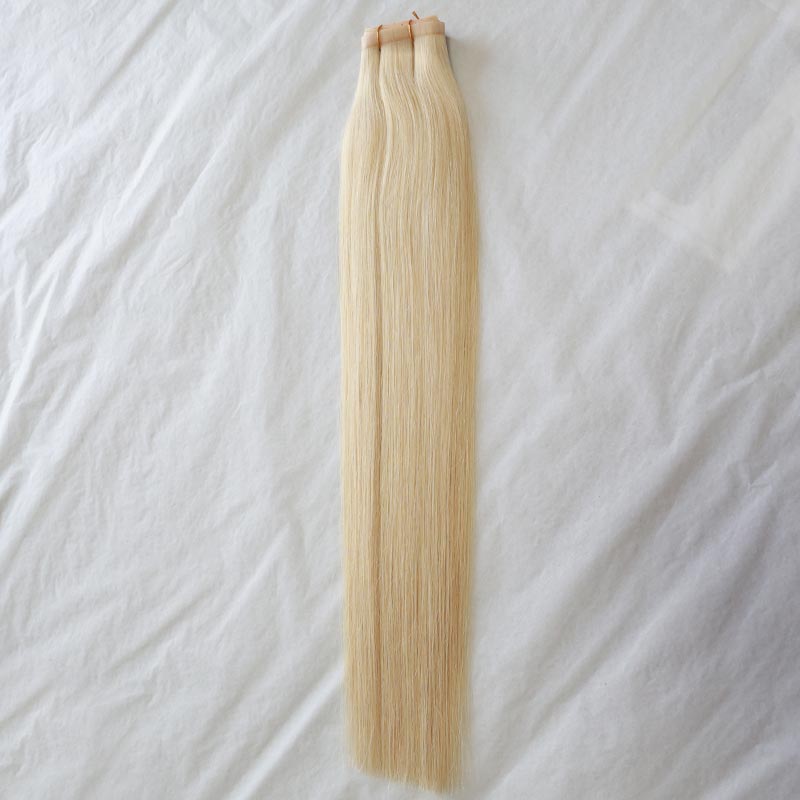
The top section of a tape extension performs several jobs simultaneously.
It holds the extension hair together, carries the adhesive, creates the connection area, and affects how noticeable the attachment feels beneath the natural hair.
PU construction should therefore be evaluated for:
- thickness;
- flexibility;
- edge finish;
- uniformity;
- hair distribution;
- consistency between pieces.
A thick or rigid top section may behave differently from a thin, flexible one.
For professional buyers comparing samples from different manufacturers, placing several unused tape sections next to each other can reveal differences in dimensions and construction that may not be obvious when examining only one piece.
Die Qualität des menschlichen Haares bestimmt immer noch das Endergebnis
A good attachment cannot compensate for poor hair.
Tape-in extensions need hair that can blend naturally with the customer’s existing texture and continue to perform through normal washing, brushing, drying, and styling.
When evaluating human hair tape extensions, professional users should pay attention to:
Nagelhaut- und Haarausrichtung
Consistent strand direction can affect smoothness and manageability.
Dichte durch die Länge
Some extensions become considerably thinner toward the ends, while others maintain greater fullness through the length.
The appropriate option depends on the intended market and hairstyle.
Farbkonsistenz
Professional brands need predictable shades across repeated production.
This becomes particularly important when customers combine multiple packs during one installation.
Texturkonsistenz
Straight, wavy, and other textures should remain reasonably consistent within the same specification.
Abwurf
Hair should be securely integrated into the tape section.
Unusual shedding during sample testing may indicate a construction issue worth investigating.
Farbpassende Tape-In-Erweiterungen
Color matching has a major effect on how natural an extension installation appears.
Matching only the roots can produce poor results because extension hair is seen primarily through the mid-lengths and ends.
Stylists should evaluate the colors visible throughout the natural hair.
Clients with dimensional color may benefit from:
- mixed shades;
- rooted shades;
- highlighted combinations;
- balayage-style colors;
- strategically placed contrasting pieces.
Professional buyers building a tape-extension collection should therefore think beyond a simple sequence of solid shades.
The ideal color range depends on the market being served.
Auswahl der richtigen Länge
Longer is not automatically better.
A successful extension should create a believable transition from the natural hair into the added length.
If a client’s natural hair is relatively short and blunt, adding extremely long extensions without enough density can create a visible separation between natural hair and extension hair.
Stylists may need to combine:
- suitable length;
- adequate extension quantity;
- layering;
- shaping;
- blending.
For wholesale and private-label collections, offering several practical length options can make the range easier for salons to adapt to different customers.
Verlängerungsgewicht und natürliches Haargleichgewicht
Weight is one of the most important yet frequently overlooked extension specifications.
A tape piece must contain enough hair to create the desired appearance, but attachment weight must remain appropriate for the natural hair supporting it.
More hair is not automatically an improvement.
Professional buyers should confirm how weight is measured and whether published specifications refer to:
- one piece;
- one pair;
- one pack;
- total hair weight.
Clear specifications reduce confusion for salons calculating how many packs are needed for different services.
Wie sollten Bandverlängerungen installiert werden?
Professional application begins before the first tape tab is attached.
The hair should be prepared according to the product and stylist’s installation procedure, with attachment areas free from substances that may interfere with the adhesive.
Sectioning should be clean and controlled.
Tape tabs should sit at an appropriate distance from the scalp so they can move naturally without hanging too far away from the head or pulling tightly against the roots.
The stylist should also avoid highly visible placement areas unless the technique specifically allows for them.
After installation, customers should receive care instructions appropriate to the particular adhesive and extension product being used.
So pflegen Sie Haarverlängerungen mit Klebeband
Maintenance affects both the appearance of the extension hair and the stability of the attachment.
Vorsichtig waschen
Hair should be washed without aggressive rubbing or tangling around the attachment points.
Halten Sie schwere Produkte vom Band fern
Conditioners, oils, and rich treatments are generally intended for the mid-lengths and ends rather than directly over adhesive connections.
Methodisch entwirren
Start at the ends and gradually work upward while supporting the extension hair.
This reduces unnecessary pulling around the attachment area.
Verwalten Sie die Wärme nachdenklich
Human hair extensions can support many styling techniques when the specific product allows them, but direct excessive heat around PU and adhesive sections should be avoided.
Befolgen Sie den Wartungsplan des Salons
As the natural hair grows, extension placement changes.
Waiting excessively long between maintenance sessions can affect comfort, blending, and attachment management.
Entfernen von Tape-In-Haarverlängerungen
Removal should be treated as part of the extension system rather than an afterthought.
Professional tape-extension removal normally uses a compatible release product to break down the adhesive connection so the extension can be separated without aggressive pulling.
Trying to force the tape apart mechanically can place unnecessary stress on natural hair.
After removal, the stylist can evaluate:
- the client’s natural hair;
- extension hair condition;
- PU tab condition;
- adhesive residue;
- whether the extension is suitable for reapplication.
Correct removal is especially important for repeat customers because the natural hair should remain in suitable condition for future services.
Was professionelle Käufer in Bandverlängerungen prüfen sollten
For salons, wholesalers, distributors, and hair brands, a finished product photograph cannot reveal everything about extension quality.
Before selecting a tape extension range, consider several aspects together.
| Quality Check | What to Examine |
|---|---|
| PU Tab | Thickness, flexibility and edge consistency |
| Adhesive Area | Uniform coverage and dimensions |
| Hair Distribution | Even attachment across the PU section |
| Haarqualität | Movement, feel and manageability |
| Ends | Density and consistency |
| Color | Repeatability between pieces and samples |
| Tape Size | Consistency across units |
| Weight | Accuracy and pack-to-pack stability |
| Packaging | Protection and clear product identification |
Samples should ideally be tested through handling and normal salon procedures rather than evaluated only in unopened packaging.
Warum Batch-Konsistenz für Salons und Marken wichtig ist
For an individual customer, one inconsistent pack is inconvenient.
For a professional hair brand, inconsistency across repeated production can affect an entire product line.
A business therefore needs more than an attractive first sample.
It should consider whether future production can maintain comparable:
- shade;
- texture;
- length;
- density;
- tape dimensions;
- PU construction;
- pack weight;
- packaging.
This becomes especially important when salons reorder the same SKU for returning customers.
For businesses creating their own extension collection, Sasil’s OEM/ODM human hair service supports customization of specifications such as hair colors, lengths, textures, weights, labels, and packaging for different professional markets.
Häufige Fehler bei der Tape-In-Verlängerung
One frequent mistake is placing tape tabs too close to visible areas.
Even a very thin connection becomes noticeable if it is installed where surrounding hair cannot adequately cover it.
Another mistake is using sections of natural hair that are too small for the extension weight. This can increase unnecessary tension.
Applying unsuitable products directly over the adhesive is another avoidable issue.
Customers may follow a good general hair-care routine but accidentally compromise the tape because they were not given extension-specific instructions.
Finally, choosing extensions based only on the initial softness of the hair can be misleading. Professional evaluation should consider construction, consistency, wash performance, manageability, shedding, and styling behavior together.
Häufig gestellte Fragen
Wie werden Tape-in-Haarverlängerungen an natürlichem Haar befestigt?
Tape-in extensions use thin adhesive tabs attached to extension hair. A stylist positions them around carefully sectioned natural hair to create a relatively flat connection.
Benötigen Tape-in-Haarverlängerungen Hitze?
Standard tape-in installation uses adhesive rather than heat-fused keratin bonds, so heat fusion is generally not required for attachment.
Sind Tape-In Extensions für dünnes Haar geeignet?
They may be considered for some people with fine or lower-density hair because of their flat attachment profile, but natural hair strength, extension weight, sectioning, and placement should be professionally evaluated first.
Können Tape-In-Erweiterungen wiederverwendet werden?
Some tape extension hair can potentially be reapplied when the hair and PU attachment remain in suitable condition. The old adhesive normally needs to be professionally removed and replaced according to the product system.
Können menschliche Haarbandverlängerungen gestylt werden?
Human hair extensions can generally support more styling flexibility than many synthetic alternatives, but users should follow the specific manufacturer’s care guidance and avoid unnecessary heat around the attachment area.
Wie unterscheiden sich Tape-In-Erweiterungen von Keratin-Erweiterungen?
Tape systems use wider flat adhesive sections, while keratin extensions normally create multiple individual bonded attachment points. Installation technique, maintenance, placement flexibility, and suitability therefore differ.
Was sollten professionelle Käufer vor der Auswahl von Bandverlängerungen testen?
Professional buyers should assess hair quality, PU construction, adhesive consistency, tape dimensions, color, texture, weight, shedding, wash performance, styling behavior, and batch repeatability.
Schlussfolgerung
Tape-in hair extensions are popular because they combine a flat attachment profile, flexible placement, efficient professional application, and the ability to create noticeable length or volume without using a heat-fused bond.
Their performance, however, depends on much more than the tape itself.
Hair quality, PU construction, adhesive uniformity, correct sectioning, suitable extension weight, professional installation, maintenance, and removal all influence the final experience.
For salons and individual users, the best tape extension is one that suits the condition of the natural hair and the intended hairstyle. For distributors and private-label brands, consistent specifications and repeatable manufacturing become equally important.
By evaluating the complete system rather than focusing on one feature, professional users can build a tape-extension range that performs more consistently and better matches the needs of their customers.