
Inhaltsverzeichnis
Einleitung
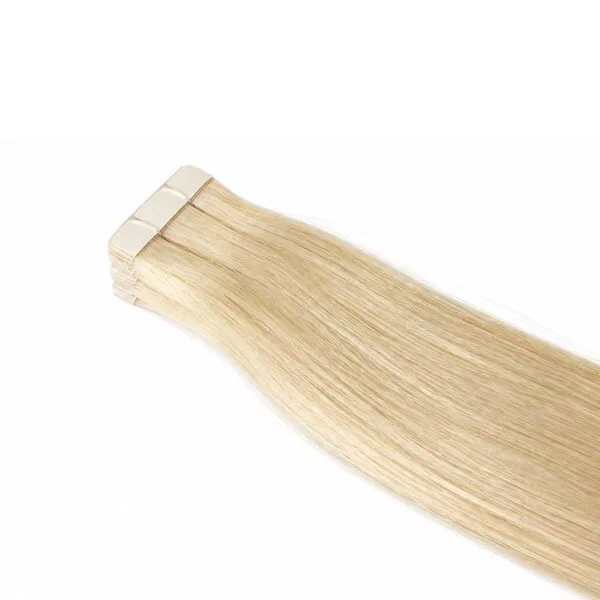
Tape-In-Haarverlängerungen Werden häufig in professionellen Salons verwendet, da ihr flacher Aufsatz hinzugefügtes Haar auf einen relativ breiten Abschnitt des natürlichen Haares verteilen kann. Wenn Laschengröße, Verlängerungsgewicht, Farbe und Installationsposition richtig aufeinander abgestimmt sind, kann der Aufsatz diskret bleiben und einen natürlichen Übergang durch die Längen unterstützen.
Allerdings sind nicht alle Tape-In-Produkte gleich aufgebaut Unterschiede in der menschlichen Haarqualität, PU-Laschen-Dicke, Klebebedeckung, Haarverteilung und Maßkonsistenz können die Installationseffizienz und die langfristige Leistung beeinträchtigen Die Auswahl eines geeigneten Produkts erfordert daher mehr als die Wahl einer Länge und eines Farbtons.
Dieser Leitfaden erklärt:
- Wie Tape-In-Haarverlängerungen aufgebaut sind
- Wie sich PU-Tabletten und Klebeschichten auf die Installation auswirken
- Welche natürlichen Haartypen für Tape-in-Anwendungen geeignet sind
- So wählen Sie Länge, Gewicht, Dichte, Farbe und Textur aus
- Was Fachleute vor der Installation prüfen sollten
- Wie sich Wartung und Entfernung auf die Produktleistung auswirken
- Welche Spezifikationen für kundenspezifische Produktlinien von Bedeutung sind
Das am besten geeignete Tape-In-System ist nicht einfach die dünnste oder leichteste Variante Es ist das Produkt, das ein angemessenes Gleichgewicht zwischen Ansatzfläche, Verlängerungsgewicht, natürlicher Haarstärke und der Wartungsroutine des Trägers schafft.
Was sind Tape-In-Haarverlängerungen?
Tape-In Hair Extensions bestehen aus Abschnitten von zusätzlichem Haar, die an dünnen Klebelaschen befestigt sind Während der Installation isoliert ein professioneller Stylist einen Abschnitt von natürlichem Haar und legt ihn zwischen zwei passende Verlängerungslaschen Die beiden Klebeflächen treffen sich um das natürliche Haar, wodurch ein flacher Aufsatz im Sandwich-Stil entsteht.
Bandsysteme gehören zur breiteren Kategorie von Haarverlängerungsverfahren, zu der auch Schussfäden, Keratinbindungen, Mikroringe, Nano-Ringe und abnehmbare Verlängerungen gehören Unterscheidungsmerkmal eines Tape-In-Systems ist seine flache Klebeverbindung und nicht eine einzelne Keratinbindung oder ein mechanischer Ring.
Die Breite der Lasche verteilt die hinzugefügten Haare auf einen breiteren Bereich als bei vielen Strang-für-Strang-Systemen, dies kann Masse reduzieren und ein glattes Profil erzeugen, wenn die Lasche richtig positioniert und von genügend natürlichem Haar bedeckt ist.
Die Konstruktion umfasst normalerweise einen Polyurethan-Abschnitt, eine Klebeschicht und Haare, die über die Lasche verteilt sind Jede Komponente beeinflusst die fertige Verbindung, sodass die Produktqualität nicht allein anhand des Haares beurteilt werden kann.
Wie Tape-In-Haarverlängerungen konstruiert werden
Die PU-Lasche bildet die Basis des Aufsatzes Sie muss dünn und flexibel genug sein, um der natürlichen Form des Kopfes zu folgen und dabei während der Installation und des Verschleißes stabil zu bleiben Eine Lasche, die übermäßig starr ist, kann sich sperrig anfühlen, während sich eine instabile Lasche bei der Handhabung oder Entfernung verformen kann.
Klebstoff sollte den vorgesehenen Klebebereich gleichmäßig abdecken Eine inkonsistente Abdeckung kann schwache Abschnitte entlang der Kante oder Mitte der Lasche erzeugen. Paarige Stücke sollten genau ausgerichtet sein, damit die Klebeflächen ohne freiliegende Kanten zusammentreffen.
Die Haarverteilung ist ein weiterer wichtiger Faktor. Das Haar sollte gleichmäßig über die Lasche befestigt werden und nicht in isolierten Abschnitten konzentriert werden. Eine ungleichmäßige Verteilung kann das Gewicht verschiedener Teile des natürlichen Haarabschnitts verändern und sichtbare Lücken schaffen.
Die PU Tape-In Human Hair Extensions Von Sasil Hair Products geliefert werden, können nach Farbe, Länge, Textur und verwandten Produktanforderungen angegeben werden Bevor Sie eine professionelle Produktpalette bestätigen, sollten die Tab-Struktur und die Haarspezifikationen zusammen und nicht als separate Merkmale bewertet werden.
Warum die Tab-Struktur wichtig ist
Die Lasche ist die Arbeitsverbindung zwischen der Verlängerung und Naturhaar, ihre Breite, Höhe, Dicke und Flexibilität bestimmen, wie der Aufsatz am Kopf sitzt.
Eine breitere Lasche verteilt das Haar auf eine größere Fläche, benötigt aber auch genügend natürliches Haar, um die Verbindung zu verbergen. Eine schmalere Lasche bietet mehr Platzierungsflexibilität in gebogenen oder begrenzten Bereichen, obwohl möglicherweise mehr Teile erforderlich sind, um die beabsichtigte Abdeckung zu schaffen.
Die Laschendicke beeinflusst das Befestigungsprofil. Eine Lasche mit niedrigem Profil kann nahe an der Kopfhaut liegen, aber eine Verringerung der Materialdicke sollte die Handhabungsstabilität nicht beeinträchtigen. Das nützlichste Design ist eines, das flexibel bleibt und gleichzeitig bei Lagerung, Installation und Wartung konsistente Abmessungen beibehält.
PU-Farbe kann auch die Sichtbarkeit beeinträchtigen Transparente oder sorgfältig aufeinander abgestimmte Basen können den Kontrast unter dem natürlichen Haar verringern Eine transparente Lasche löst jedoch keine schlechte Platzierung, wenn der Abschnitt zu nahe an einem sichtbaren Scheitel oder zu nahe am Haaransatz angebracht wird, kann der Aufsatz dennoch auffallen.
Für den professionellen Einsatz sollten die folgenden Tab-Details konsistent sein:
- Breite und Höhe
- PU-Dicke
- Kantenform
- Klebedeckung
- Haarverteilung
- Laschenflexibilität
- Ausrichtung zwischen gepaarten Teilen
- Gewicht des an jeder Lasche befestigten Haares
Diese Abmessungen sollten dokumentiert werden, damit Nachbestellungen mit einer genehmigten Referenz verglichen werden können.
Wie Tape-In-Haarverlängerungen mit anderen Methoden verglichen werden
Tape-ins sind eines von mehreren professionellen Befestigungssystemen Ihr Hauptvorteil ist eine flache, verteilte Verbindung, aber andere Methoden können angemessener sein, wenn der Kunde eine individuelle Strangbewegung oder einen anderen Wartungsansatz benötigt.
| Erweiterungsmethode | Aufsatzstruktur | Profil | Platzierungskontrolle | Hauptbetrachtung der Instandhaltung | Geeignete Anwendung |
|---|---|---|---|---|---|
| Einband | Flache PU-Klebelaschen | Niedrig und flach | Sektionsbasierte Vermittlung | Klebepflege und professionelle Neupositionierung | Feines bis mittleres Haar mit ausreichender Deckkraft |
| Flachspitze | Wärmeaktivierte flache Keratinbindung | Kleine Einzelanleihe | Detaillierte Strangplatzierung | Professionelle Bindungsentfernung | Kundenspezifische Längen - und Volumenverteilung |
| I-Tipp | Verlängerungsspitze im Ring befestigt | Kleiner mechanischer Punkt | Einzelplatzierung | Öffnungs - und Neupositionierungsringe | Geeignetes Haar, das die Ringe verbergen kann |
| Nano-ring | Kleiner Ringanschluss | Sehr diskreter Punkt | Detaillierte Platzierung | Ringinspektion und Neupositionierung | Kontrollierte Platzierung mit Leichtsträngen |
| Maschinenschuss | Durchlaufnaht nähen | Wesentlichere | Zeilenbasierte Abdeckung | Reihenspannung und geplante Umrüstung | Mittel- bis dickes Haar erfordert eine breite Abdeckung |
| Handgebundener Schuss | Dünne handgebundene Naht | Flexible Reihe | Reihenbasierte Platzierung | Schusskantenhandhabung | Feines bis mittleres Haar bei fachgerechter Montage |
Tape-In Hair Extensions können vorzuziehen sein, wenn Ebenheit und verteiltes Gewicht Priorität haben Strandbasierte Methoden bieten möglicherweise mehr Freiheit für eine individuelle Platzierung, während Schussfäden eine breitere Abdeckung mit weniger kontinuierlichen Abschnitten bieten können.
Keine Befestigungsmethode sollte nur gewählt werden, weil sie beliebt ist Natürliche Haardichte, Kopfhautzustand, Stylinggewohnheiten und Zugang zu professioneller Wartung müssen alle berücksichtigt werden.
Auswahl von Tape-In-Haarverlängerungen für verschiedene Haartypen
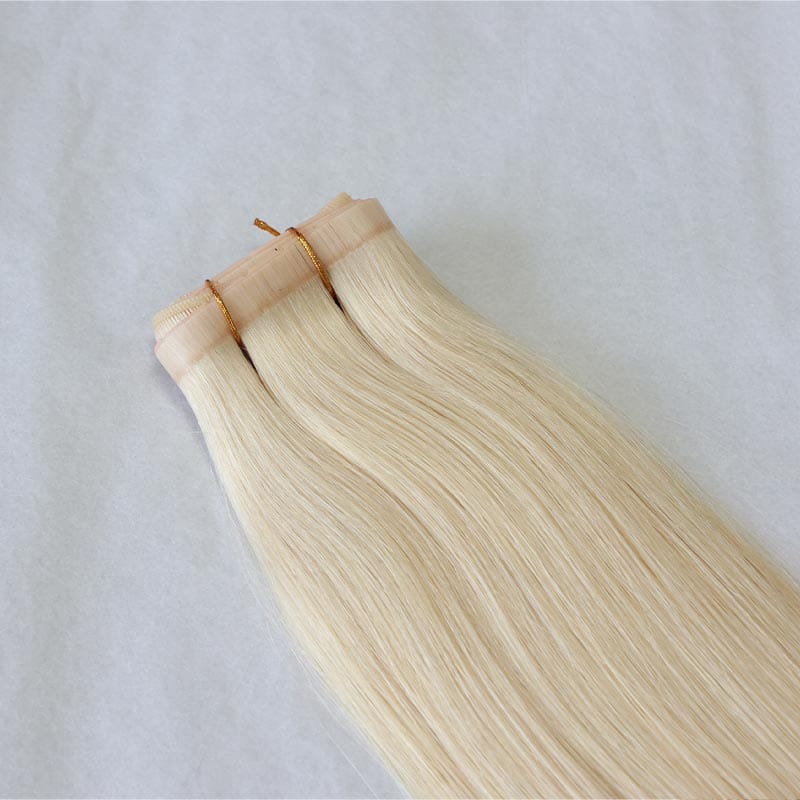
Feine Haare können von einem flachen Aufsatz profitieren, da die Verbindung möglicherweise leichter zu verbergen ist als eine dicke Naht oder ein großer Ring. Feines Haar erfordert jedoch auch eine sorgfältige Gewichtskontrolle. Schwere Laschen, die an schwachen Abschnitten befestigt sind, können unnötige Spannungen auf natürliches Haar ausüben.
Bei feinem oder weniger dichtem Haar kann der Stylist hellere Stücke, weniger Reihen und konservative Platzierung verwenden. Die Aufsätze sollten von fragilen Bereichen rund um den Haaransatz und anderen Abschnitten mit unzureichender Abdeckung entfernt bleiben.
Medium-density hair can accommodate a wider range of tape-in configurations. Selection can focus on the desired amount of volume, extension length and the client’s usual styling routine. Even when the natural hair appears strong, tab weight should remain balanced across the installation.
Thick hair usually requires enough extension density to blend with the natural middle and ends. If the added hair is too light, the natural hair may remain visibly separate. Additional density can be achieved through planned placement, but tabs should not be crowded into a limited area.
Curly and textured hair requires particular attention to texture matching. A visually similar pattern may behave differently after washing or exposure to humidity. Samples should be washed and dried naturally to assess whether the extension texture remains compatible with the intended hair type.
People with actively shedding, severely weakened or irritated scalp areas should receive an appropriate professional assessment before considering semi-permanent extensions. Product selection cannot compensate for natural hair that is not currently able to support added weight.
Auswahl der richtigen Länge, des richtigen Gewichts und der richtigen Dichte
Length and weight must be selected together. A longer extension spreads the same amount of hair over a greater distance, so the ends may appear thinner if the weight is not adjusted appropriately.
When the goal is primarily volume, extensions may be selected close to the natural hair length and positioned in areas that require additional density. When the goal is greater length, the stylist must also create a smooth transition between the natural ends and the added hair.
The natural haircut affects the amount of extension hair required. A blunt haircut may need more blending through the lower sections, while layered natural hair can sometimes transition more gradually into additional length.
Important specifications include total extension weight, weight per tab, number of tabs, finished length and end density. These values should not be considered independently. A light tab may be appropriate for fine hair, but too little total density can produce an incomplete visual result.
Single-drawn and double-drawn hair also create different appearances. Single-drawn hair contains more variation in strand length, producing a naturally tapered effect. Double-drawn hair contains a higher proportion of similarly long strands, creating fuller ends. The choice should reflect the desired finish rather than an assumption that one structure suits every product line.
Farb- und Texturanpassung
Color matching should focus on the natural hair through the middle and ends because this is where the extension must blend. Matching only the root can create an obvious transition, particularly when natural hair includes highlights, balayage or sun-lightened sections.
Mixed shades can reproduce natural tonal variation more effectively than a single flat color. Rooted, highlighted and blended shades may be useful when the natural hair contains visible depth and dimension.
Lighting conditions affect color assessment. Warm indoor light can make neutral or ash shades appear more golden, while cool lighting can reduce the visibility of warm tones. Color should therefore be reviewed under neutral or natural light before installation.
Texture matching is equally important. Straight, body wave, curly and coily patterns differ not only in appearance but also in volume and behavior. A texture should be assessed after washing and drying because packaging and temporary styling may not show its long-term pattern accurately.
Sasil’s hair extension color matching guide explains how undertone, multi-tonal blending, lighting and physical color references influence professional shade selection.
For repeat product lines, a digital color number is not enough. Approved physical color samples should be retained so future batches can be checked against the same reference.
Professionelle Installationsanforderungen
Tape-In Hair Extensions should be installed on clean, dry hair without heavy oils or conditioning residue near the roots. Residue can reduce the contact between adhesive surfaces and affect attachment stability.
The stylist begins by creating clean sections that correspond to the tab dimensions. The natural hair placed between two tabs should be distributed evenly. Too much hair can prevent the adhesive surfaces from meeting correctly, while too little hair may place excessive load on a weak section.
The tabs should align so one piece does not extend beyond the other. Exposed adhesive edges can attract residue and nearby strands. Consistent product dimensions make this alignment easier during repeated installation.
Placement distance from the scalp is also important. A tab installed too close to the scalp may feel restricted and fail to move naturally. A connection placed too far away may become visible or rotate.
The layout should account for normal partings, ponytails and styling habits. Tabs should not be placed directly in areas that become exposed during everyday styling.
Professional installation is particularly important for the back and side areas of the head, where accurate sectioning and alignment are difficult to achieve without a clear view.
Komfort, Gewichtsverteilung und Haarsicherheit
Tape-in attachments should lie flat and move comfortably with the natural hair. Persistent pulling, pain or headaches are not expected signs of a successful installation.
The American Academy of Dermatology advises that weaves and extensions should not feel painful or excessively tight. Repeated pulling can contribute to traction-related hair loss, especially when heavy additions are combined with fragile natural hair or continuously tight styling.
Comfort depends on several connected factors: tab weight, section size, placement distance, natural hair strength and the number of rows. Reducing only one dimension does not automatically solve an unbalanced installation.
Attachments should be checked if the wearer experiences persistent discomfort, scalp bumps, unusual shedding, irritation or repeated tab rotation. A qualified professional should loosen or remove unsuitable sections rather than expecting the scalp to adapt to excessive tension.
Tägliche Pflege und Wartung
Tape-In Hair Extensions need a care routine that protects both the human hair and the adhesive connections. Brushing should begin at the ends and move upward while the root area is supported. A brush should pass through the lengths without catching the tabs.
Hair can be washed using controlled downward movements. Aggressive circular rubbing near the scalp may twist tabs and neighboring strands together. Conditioner and treatment masks should be concentrated on the middle and ends rather than placed directly over the adhesive area.
Oils, heavy serums and rich conditioning products should be kept away from the tabs. Even a stable adhesive connection may be affected by repeated exposure to residues that migrate into the bonding surface.
Hair should be dried thoroughly before sleeping. Wet hair is more vulnerable to tangling, and moisture around the root area can make the attachments more difficult to manage. A loose braid or low ponytail can reduce friction without creating excessive tension.
Heat styling tools should not contact the tabs. Direct heat may affect the PU base or adhesive layer. Controlled styling can be applied to the middle and ends when the human hair condition permits it.
Maintenance appointments should be arranged according to natural hair growth and attachment condition. As the natural hair grows, the tabs move farther from the scalp and may become more visible or less stable. They should be professionally removed and repositioned rather than left in place indefinitely.
Entfernung und Neuinstallation
Removal should use a product and method compatible with the adhesive system. The remover is applied to the attachment, allowing the adhesive connection to release without forceful pulling.
The tabs should be separated patiently. Pulling before the adhesive has released may place unnecessary stress on natural hair. Any remaining residue should be removed carefully before the hair is cleansed and prepared for another installation.
Naturally shed strands may collect between the attachment and scalp during wear. This is expected because hairs that would normally fall away can remain held near the tab. They should be separated gently during removal rather than treated as a single knot.
Before reinstallation, the extension hair and PU tabs should be inspected. Hair with significant tangling, breakage or weakened attachment areas should not automatically be reused. Replacement adhesive must also match the tab dimensions and intended application.
The natural hair should be checked for breakage, irritation and uneven density before another set is installed. Repositioning the tabs can help avoid repeatedly loading exactly the same sections.
So bewerten Sie die Qualität der Haarverlängerung mit Klebeband
A professional evaluation should examine the hair, PU base and adhesive system separately before assessing how they work together.
Begin by measuring several tabs from different parts of the order. Width, height and weight should remain consistent within the confirmed tolerance. Paired pieces should align without trimming or manual adjustment.
Dry brushing can reveal unusual shedding or loose short strands. The product should then undergo a controlled wash test to assess texture, tangling, color release, coating residue and drying behavior.
The PU tab should remain stable during normal handling. Its edges should be clean and the hair should be distributed evenly across the attachment. Adhesive coverage should be consistent without missing areas or substantial overflow.
A suitable inspection checklist includes:
| Inspection area | What to check | Why it matters |
|---|---|---|
| Tab dimensions | Width, height and edge consistency | Supports accurate pairing and predictable placement |
| Weight per piece | Variation between sampled tabs | Helps control load distribution |
| PU base | Flexibility, thickness and stability | Affects comfort and attachment profile |
| Klebedeckung | Even surface and clean edges | Influences bonding consistency |
| Haarverteilung | Even density across the tab | Prevents weak or overloaded sections |
| Dry brushing | Shedding and short strand release | Reveals initial construction issues |
| Wash testing | Tangling, residue and texture change | Shows performance beyond initial appearance |
| Farbkonsistenz | Comparison with approved sample | Supports repeat-order continuity |
| Enddichte | Fullness through the lower lengths | Affects blending and finished appearance |
A product that feels smooth when first unpacked has not necessarily passed a meaningful quality assessment. Washing and drying provide more useful evidence than initial softness alone.
Tape-In-Haarverlängerungen für professionelle Produktlinien

Salons, distributors and private-label brands need specifications that can be repeated, inspected and communicated clearly. Descriptions such as “thin tape” or “natural color” are not precise enough for consistent production.
A tape-in product specification should confirm:
- Haarmaterial und Verarbeitungsgrad
- Fertige Länge
- Weight per tab
- Number of pieces per set
- PU-Laschenmaße
- Adhesive requirements
- Farbreferenz
- Texture standard
- Enddichte
- Packaging and labeling
- Inspection tolerances
When developing a customized line through Sasil’s OEM and ODM services, the approved sample should become the physical reference for production. Written specifications and physical samples work together: the document defines measurable requirements, while the sample confirms visual and handling expectations.
The wider range of Menschliche Haarverlängerungen can also help professional users compare tape-in systems with keratin, ring and weft alternatives before defining a complete product portfolio.
Häufige Auswahlfehler
One common mistake is selecting Tape-In Hair Extensions only according to length. If weight, end density and natural hair thickness are not considered, the final result may look disconnected even when the shade is correct.
Another mistake is assuming that the thinnest tab must be the most comfortable. Tab flexibility, stability, hair weight and installation technique all contribute to comfort.
Using too many tabs on fine hair can create unnecessary tension and make the connections difficult to conceal. Using too few on thick hair may create an incomplete blend. The number of pieces should be based on the natural hair and intended result.
Color numbers should not be treated as universal standards. A shade number may represent different undertones between suppliers, making physical sample confirmation essential.
Finally, maintenance expectations should be discussed before installation. Tape-ins require careful product use, professional removal and scheduled repositioning. A client who cannot follow this routine may be better suited to a removable method.
Schlussfolgerung
Choosing Tape-In-Haarverlängerungen requires a balanced assessment of natural hair strength, tab structure, adhesive coverage, extension weight, length, color and maintenance expectations. Their flat profile can support discreet blending, but only when the product specifications and installation method work together.
For professional product selection, the PU base and adhesive system deserve the same attention as the human hair. Consistent tab dimensions, even hair distribution, verified wash performance and approved color references help create predictable results across repeat applications.
A successful tape-in system should not depend on broad quality claims. It should be supported by measurable specifications, representative samples, appropriate installation and a maintenance routine suited to the wearer’s natural hair.
FAQ
Sind Tape-In Hair Extensions für feines Haar geeignet?
Tape-In Hair Extensions may suit fine hair because their flat tabs distribute added hair across a broader section. However, the pieces must be lightweight, correctly positioned and limited to areas with enough natural hair for support and coverage. Fragile or actively shedding hair should be professionally assessed first.
Können Tape-In Hair Extensions wiederverwendet werden?
Some tape-in extensions can be reused when the human hair and PU tabs remain in suitable condition. The original adhesive is removed and replaced before professional reinstallation. Each piece should be inspected for tangling, shedding, weakened tabs and uneven hair distribution before reuse.
Warum rutschen Tape-In-Erweiterungen?
Slipping can result from residue on natural hair, uneven sectioning, excessive hair between the tabs, incorrect alignment, product applied near the adhesive or inconsistent bonding surfaces. The cause should be identified before the attachment is replaced rather than assuming that every case comes from the adhesive alone.
Wie sollten Tape-In Hair Extensions gewaschen werden?
The hair should be washed with controlled downward movements while avoiding aggressive rubbing around the tabs. Conditioner, oils and rich treatment products should remain on the middle and ends. The roots and attachment area should be dried thoroughly before sleeping or styling.
Welche Spezifikationen sind wichtig für kundenspezifische Tape-In-Erweiterungen?
Important specifications include hair material, length, weight per tab, tab dimensions, adhesive requirements, color, texture, end density, packaging and acceptable tolerances. An approved physical sample should be retained to support quality comparison during repeat production.